Last Updated: October 29, 2026
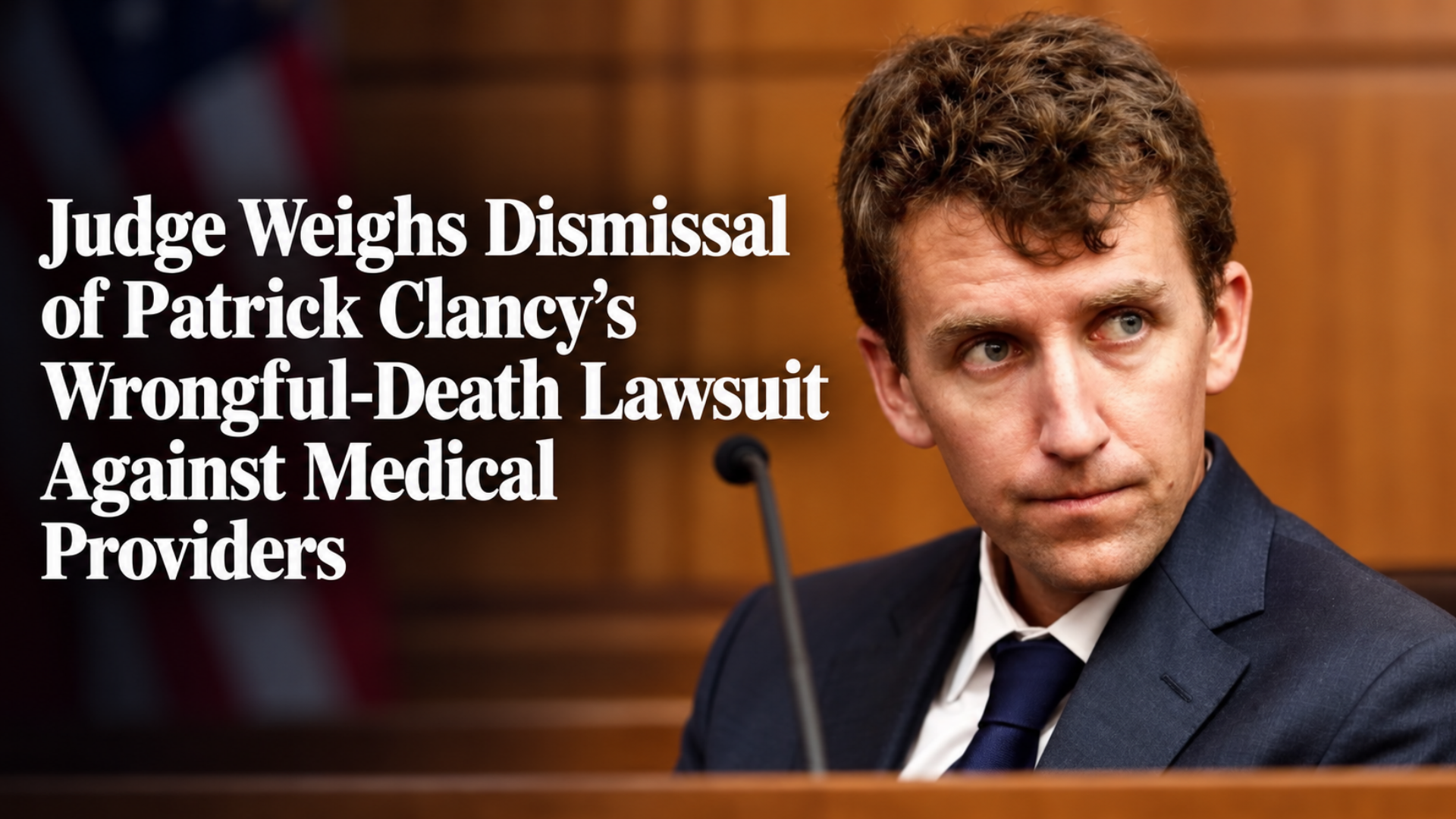
Image Source: Instagram
| Quick Report: A Massachusetts judge on October 28 heard arguments on whether to dismiss a wrongful-death lawsuit filed by Patrick Clancy against mental health providers who treated his former wife, Lindsay Clancy. The lawsuit alleges that negligent psychiatric treatment contributed to the January 2023 deaths of their three children. Defense attorneys argued that the providers could not reasonably have anticipated the killings and invoked state law limiting certain duties to warn or protect potential victims. Norfolk Superior Court Judge Michael Doolin took the dismissal motion under advisement without issuing an immediate ruling. |
Judge Hears Arguments Over Wrongful-Death Lawsuit
Patrick Clancy’s lawsuit names psychiatrist Dr. Jennifer Tufts, psychiatric nurse practitioner Rebecca Jollotta, Aster Mental Health Inc., and South Shore Health System Inc.
The complaint, originally filed in January 2026, alleges that the providers failed to properly diagnose, treat, and monitor Lindsay Clancy’s deteriorating mental health before the deaths of the couple’s children.
Patrick filed the lawsuit individually and on behalf of his children’s estates. The defendants subsequently moved to dismiss the case, arguing that the claims do not establish a legally sufficient basis for liability.
During the October 28 hearing, attorneys for both sides presented arguments addressing the providers’ responsibilities and whether the lawsuit should proceed.
Judge Doolin took the motion under advisement. The hearing did not establish that the defendants committed medical negligence or caused the children’s deaths.
Medical Providers Argue Killings Were Not Foreseeable
Attorneys representing Tufts, Jollotta, and their respective organizations argued that Massachusetts law limits mental health professionals’ liability for failing to warn or protect potential victims of their patients.
Under Massachusetts General Laws Chapter 123, Section 36B, a mental health professional generally has no duty to warn or protect potential victims unless certain statutory conditions are met. These include circumstances involving an explicit threat accompanied by apparent intent and ability to carry it out, or a known history of violence and a clear danger to identifiable victims.
The defendants argued that Lindsay Clancy had not communicated an explicit threat to harm her children and that the killings could not reasonably have been anticipated.
Attorney Timothy Sweetland, representing Jollotta and South Shore Health, disputed whether the original complaint established that Lindsay had warned her providers about thoughts of harming her children.
Attorney Mary Alys Azzarito, representing Tufts and Aster Mental Health, similarly argued that the tragedy was not foreseeable.
The providers also disputed the allegations concerning the adequacy of their treatment.
These arguments concern the legal sufficiency of Patrick’s claims and do not constitute a judicial determination that the providers complied with the applicable standard of care.
Patrick Clancy's Attorney Alleges Negligent Psychiatric Treatment
Patrick’s attorney, Howard Cooper, opposed the dismissal request, arguing that the lawsuit concerns broader allegations of medical negligence rather than solely a failure to warn potential victims.
Cooper alleged that the defendants failed to properly manage Lindsay’s psychiatric condition despite indications that her mental health was deteriorating.
He argued that the providers’ treatment fell below accepted professional standards and substantially contributed to the circumstances surrounding the children’s deaths.
The lawsuit also questions the management of Lindsay’s psychiatric medications and whether her worsening symptoms were adequately addressed.
Cooper further asserted during the hearing that Lindsay had communicated concerns about potentially harming her children to her healthcare providers.
However, that assertion remains disputed.
Lindsay’s criminal defense attorney, Kevin Reddington, subsequently challenged Cooper’s suggestion that Lindsay would testify about having disclosed homicidal thoughts to her providers.
Reddington maintained that Lindsay had not reported homicidal intentions toward her children to those providers and had not agreed to testify in Patrick’s civil lawsuit.
The conflicting statements have not been resolved through a judicial finding.
Civil Lawsuit Follows Lindsay Clancy's Murder Mistrial
The wrongful-death lawsuit arises from the January 24, 2023 deaths of Cora Clancy, 5, Dawson Clancy, 3, and Callan Clancy, 8 months old, in Duxbury, Massachusetts.
Lindsay Clancy faces murder charges in connection with their deaths. Her defense acknowledged that she caused the children’s deaths but argued that severe mental illness, including alleged postpartum psychosis, left her without criminal responsibility.
Prosecutors disputed that defense.
Her criminal trial ended in a mistrial on September 4, 2026, after jurors failed to reach a unanimous verdict. Jurors subsequently reported an 11-1 division in favor of finding her not guilty by reason of insanity.
Brownstone Law previously covered the criminal proceedings in Judge Denies Lindsay Clancy’s Request to Question Holdout Juror After Mistrial.
That October 26 report addressed the court’s rejection of further questioning into the holdout juror and the pending motion to dismiss the criminal charges on double-jeopardy grounds.
Patrick’s wrongful-death lawsuit is a separate civil proceeding. Its outcome will not independently determine Lindsay’s criminal responsibility.
Separate Medical Malpractice Lawsuit Also Remains Pending
Lindsay Clancy has also filed her own medical malpractice lawsuit against healthcare providers involved in her treatment.
Her complaint alleges that providers failed to properly diagnose and manage her psychiatric condition and that medication decisions contributed to a severe deterioration in her mental health.
That lawsuit is legally distinct from Patrick’s wrongful-death action, although both proceedings involve allegations concerning Lindsay’s psychiatric treatment before January 2023.
Neither lawsuit has resulted in a judicial finding establishing medical negligence or determining that the treatment caused the children’s deaths.
What Happens Next?
Judge Michael Doolin must decide whether Patrick Clancy’s wrongful-death claims can proceed against the healthcare providers or whether some or all of the claims should be dismissed.
The October 28 hearing concluded without an immediate ruling, and no subsequent decision was confirmed in the reporting reviewed through October 29.
Separately, Lindsay Clancy’s criminal case remains pending. A November 2 hearing is scheduled to address outstanding matters, including her defense’s effort to dismiss the charges on double-jeopardy grounds.
The civil and criminal proceedings involve different legal questions and will be resolved independently.
For now, Patrick’s lawsuit remains pending while the court considers the defendants’ dismissal motion.
Disclaimer: This article provides general information and does not constitute legal advice. It reflects publicly available reporting reviewed through October 29, 2026. Allegations of medical negligence, inadequate psychiatric treatment, and causation remain disputed and should not be treated as established judicial findings. The October 28 hearing did not resolve the wrongful-death lawsuit or Lindsay Clancy’s separate criminal case.