Last Updated: November 2, 2026
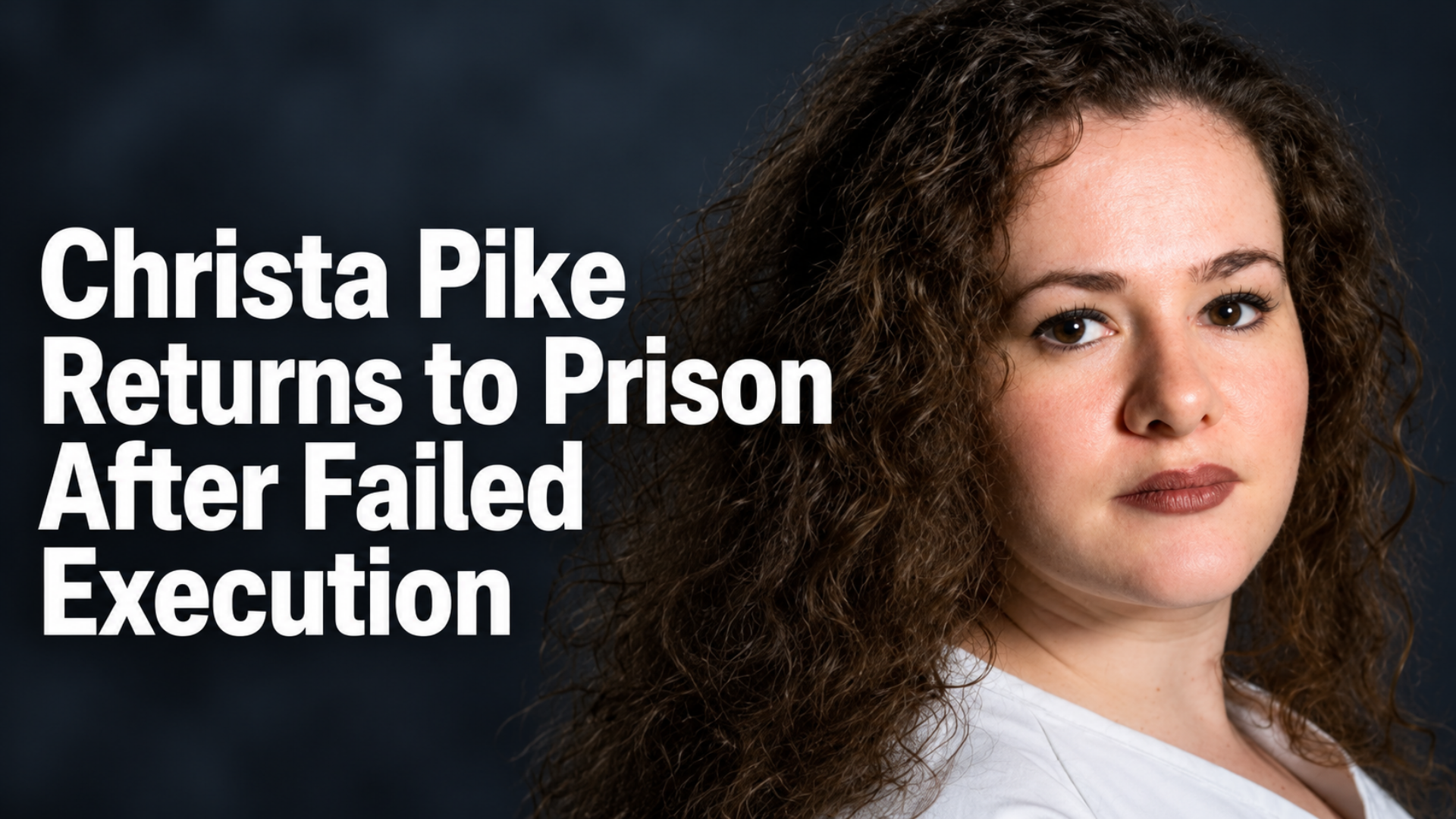
Image Source: Instagram
Quick Report: |
Attorneys Announce Pike’s Return to Prison
Pike, 50, was discharged from the hospital and returned to the Deborah K. Johnson Rehabilitation Center, according to an October 10 statement from her legal team. Her attorneys said she would continue receiving medical care in prison and that they would monitor her recovery.
The announcement followed her hospitalization after Tennessee administered two doses of pentobarbital during the September 30 execution attempt at Riverbend Maximum Security Institution. She survived the procedure and subsequently regained consciousness. Her discharge marked a change in where she was receiving care; it did not establish that she had fully recovered.
Brownstone Law previously covered her condition and the evidence-preservation proceedings in Christa Pike Regains Consciousness; Judge Orders Failed Execution Evidence Preserved.
Officials Release Written Account of Emergency Call
A written account released on October 12 provided additional details about the emergency response following the failed execution.
According to the Nashville Department of Emergency Communications, the initial 911 call from Riverbend Maximum Security Institution was received at 8:40 p.m. Central Time on September 30.
Officials said the original audio was withheld from public disclosure following a legal review. The department instead prepared a written account based on its review of the recording.
The release therefore concerns a written account of the call, rather than the original audio recording. It adds information about the emergency response but does not, by itself, establish why the execution procedure failed.
Court Previously Ordered Execution Evidence Preserved
The disclosure followed an October 7 hearing at which Judge I’Ashea Myles ordered Tennessee officials to preserve evidence connected to the execution attempt.
The preservation requirements covered materials associated with the procedure, including execution drugs and equipment, relevant recordings, communications, and medical documentation. Pike’s attorneys sought to retain evidence that could be examined in connection with the failed execution and potential legal challenges.
The order concerned preservation of evidence. It did not decide the cause of the failed procedure or establish that officials violated Pike’s constitutional rights.
| A failed execution can also raise broader legal questions about prisoners’ rights, constitutional protections, and whether another execution attempt may proceed. Learn more about the legal challenges and prisoners’ rights following a botched execution . |
Governor Bill Lee also ordered an independent review after the failed execution and postponed Tennessee’s remaining scheduled execution for 2026. These measures were announced earlier in the aftermath of the September 30 attempt.
October 20 Poll Examines Repeat Execution Attempts
A national poll published October 20 found that approximately one-third of Americans supported another execution attempt after an initial attempt fails. Thirty-nine percent favored life imprisonment instead, while 26% were unsure.
The survey included 1,679 U.S. adults and had a reported margin of error of approximately two percentage points. The findings reflect public opinion and do not change Pike’s sentence or determine whether another execution attempt may proceed.
Latest Developments Do Not Announce a Change to Pike’s Sentence
Pike received a death sentence for the 1995 murder of 19-year-old Colleen Slemmer. The updates concerning her hospital discharge, emergency response records, and public opinion do not announce an order overturning her conviction or replacing her death sentence.
Disclaimer: This article provides general news and legal information, not legal advice. It reflects reporting available as of October 21, 2026. Medical updates are attributed to Pike’s attorneys. The evidence-preservation order does not establish wrongdoing or resolve the merits of any legal challenge.