Last Updated: October 26, 2026
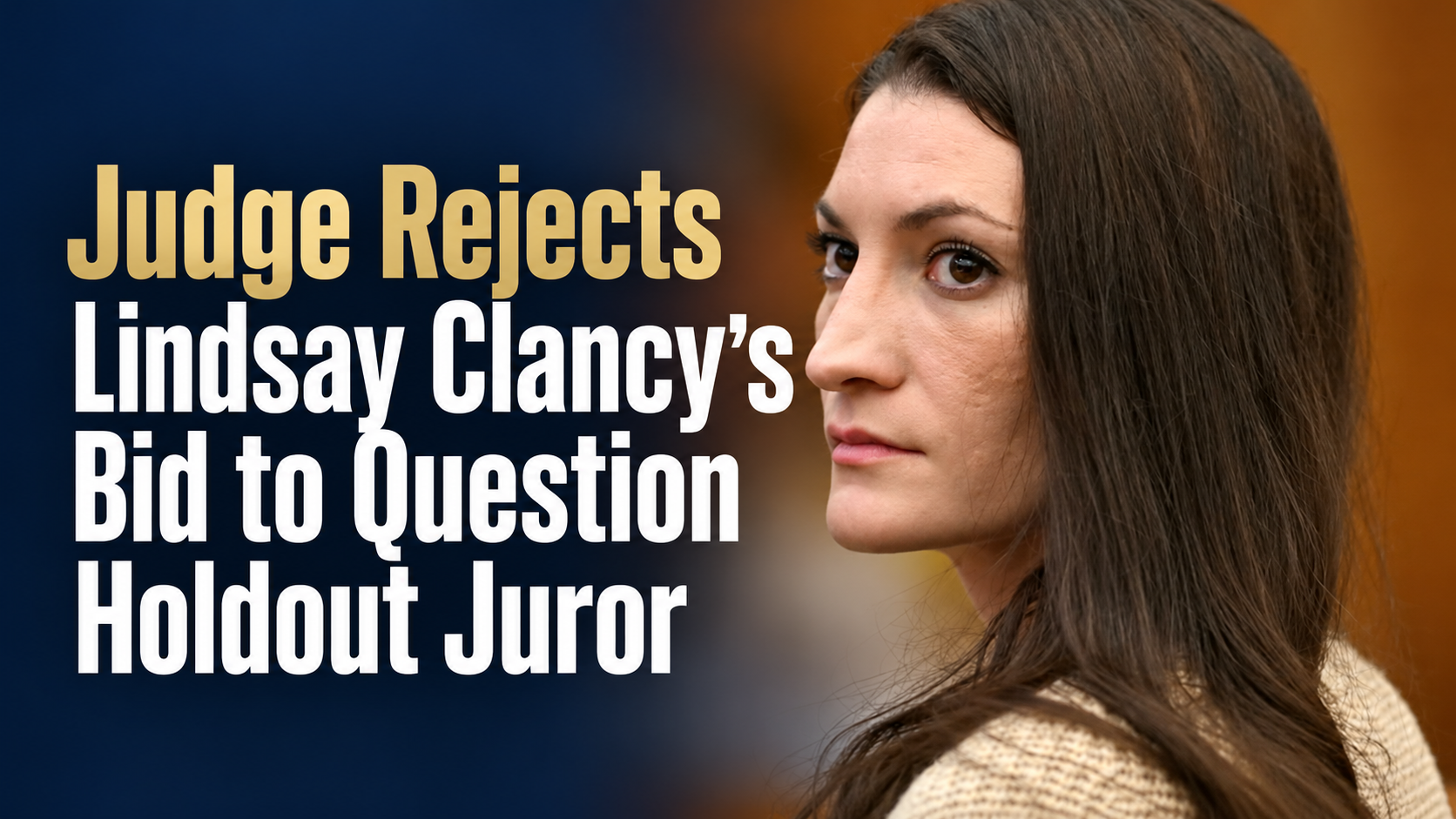
| Quick Report: A Massachusetts judge on October 21 denied Lindsay Clancy’s request for an evidentiary hearing concerning the holdout juror in her murder trial. Judge William Sullivan rejected further questioning into the juror’s conduct and deliberations. The ruling did not resolve Clancy’s separate motion to dismiss the charges on double-jeopardy grounds. Her next hearing remains scheduled for November 2. |
Judge Rejects Further Inquiry Into Holdout Juror
Clancy’s defense sought to investigate whether the juror had provided inaccurate answers on his jury questionnaire, improperly used his cellphone during deliberations, or failed to follow the court’s instructions.
Sullivan concluded that further questioning would improperly intrude into jurors’ reasoning and confidential deliberations. He also explained that information emerging only after the mistrial could not establish whether ending the trial had been necessary based on the circumstances known at that time.
The judge also rejected defense requests for access to the juror’s questionnaire and an independent examination of his cellphone. The allegations raised by the defense should not be treated as established findings of misconduct.
Defense Sought Hearing to Support Dismissal Request
The hearing request was part of the defense’s effort to prevent another prosecution following the mistrial. Attorney Kevin Reddington argued that the court should have investigated concerns about the holdout juror before ending the first trial.
Brownstone Law previously covered that request in Lindsay Clancy Seeks Evidentiary Hearing on Holdout Juror.
At that stage, the defense was seeking permission to present witnesses and evidence at the November 2 hearing. The October 21 ruling rejects that requested evidentiary inquiry.
Murder Trial Ended Without a Unanimous Verdict
Clancy’s trial ended in a mistrial on September 4 after the jury could not reach a unanimous verdict. Jurors subsequently reported that 11 favored finding her not guilty by reason of insanity, while one favored conviction.
Clancy faces murder charges in connection with the January 2023 deaths of her three children in Duxbury, Massachusetts. Her defense argued that mental illness left her without criminal responsibility; prosecutors disputed that position.
Double-Jeopardy Challenge Remains Unresolved
The defense’s separate dismissal motion challenges whether declaring the mistrial was justified. It argues that another trial would violate Clancy’s protection against double jeopardy.
Before the latest ruling, Reddington had indicated that the defense intended to seek appellate review if the court denied the double-jeopardy motion without an evidentiary hearing. That was a stated plan contingent on the court’s handling of the dismissal request.
| Related Reading: Understanding Double Jeopardy |
What Happens Next?
The November 2 hearing remains scheduled to address outstanding matters. The October 21 decision denies the requested juror inquiry; it does not decide the pending motion to dismiss the charges.
Disclaimer: This article provides general information and does not constitute legal advice. It reflects publicly available reporting reviewed through October 26, 2026. Allegations of juror misconduct are not established judicial findings.