Last Updated: September 4, 2026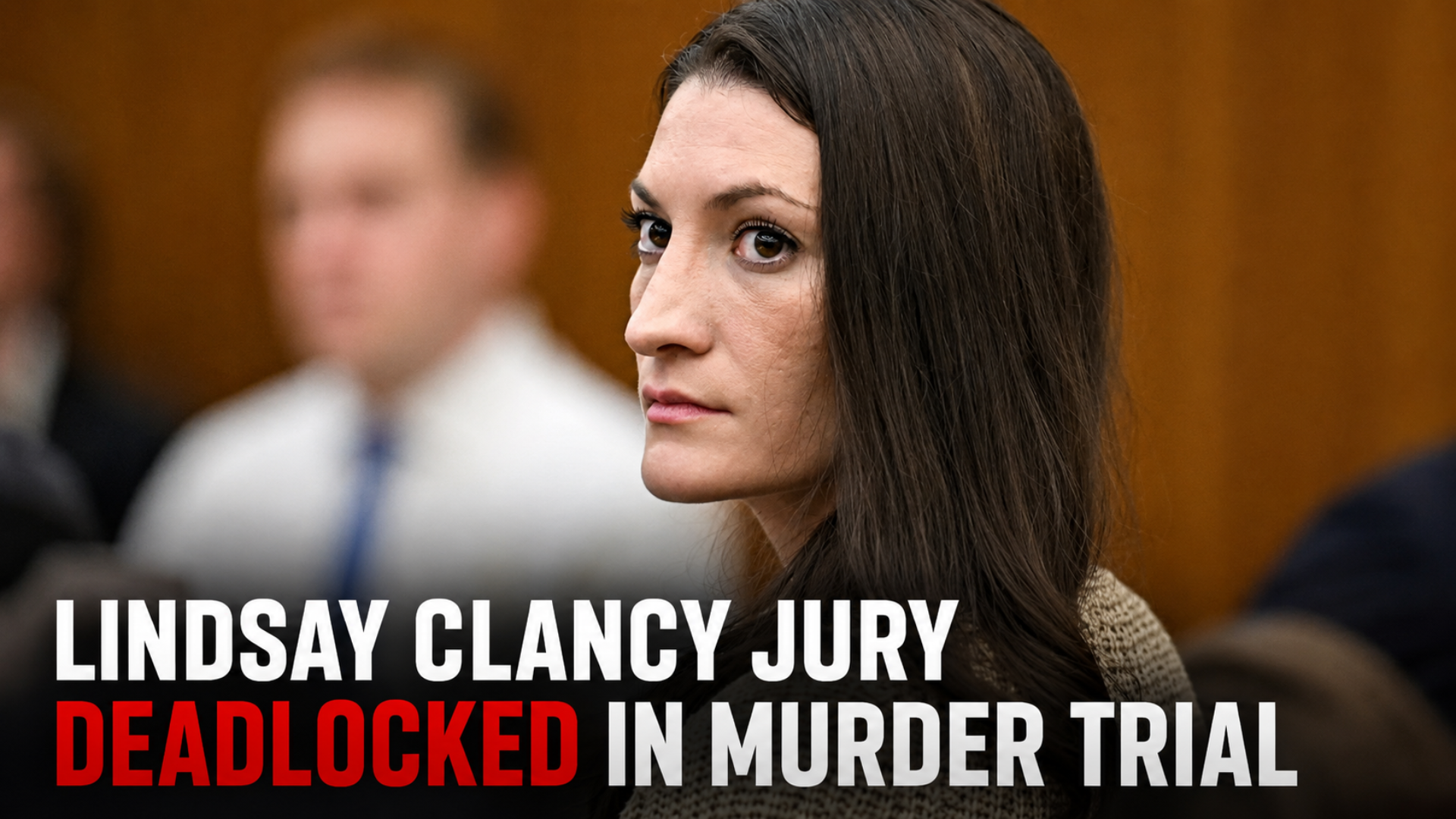
Image Source: Instagram
| Quick Report: Jurors deciding the murder case against Massachusetts mother Lindsay Clancy have told the court they are unable to reach a unanimous verdict, but the judge has not declared a mistrial. Clancy is charged with three counts of first-degree murder in the January 2023 deaths of her children, Cora, Dawson and Callan. Clancy does not dispute that she killed the children, but her defense argues that she was suffering from postpartum psychosis and lacked criminal responsibility at the time. Prosecutors contend that the killings were intentional and planned. Plymouth Superior Court Judge William Sullivan instructed the jury to continue deliberating after it reported being deadlocked on September 1. Jurors were set to return September 2 for a fifth day of deliberations. |
Jurors in the murder trial of Lindsay Clancy have reported that they cannot unanimously agree on a verdict, leaving the Massachusetts case unresolved after more than 20 hours of deliberations.
The jury informed Plymouth Superior Court Judge William Sullivan of the impasse on September 1, after four days of deliberations. Sullivan did not declare a mistrial. Instead, he instructed the 12 jurors to continue considering the evidence and attempt to reach a unanimous verdict.
The nine-woman, three-man jury began deliberating on August 27 after approximately five weeks of testimony. The trial included testimony from more than 80 witnesses and hundreds of exhibits.
| For more information about the legal effect of a deadlock, possible mistrial and potential retrial, read Brownstone Law’s guide explaining what a hung jury is and what happens next . |
As of September 2, the jurors were scheduled to return for a fifth day of deliberations.
Clancy, 36, a former labor-and-delivery nurse from Duxbury, Massachusetts, is charged with three counts of first-degree murder in connection with the deaths of her children: 5-year-old Cora, 3-year-old Dawson and 8-month-old Callan.
The central issue at trial is not whether Clancy caused the children’s deaths. Her defense has acknowledged that she killed them. Instead, the jury must determine whether she was criminally responsible for her conduct under Massachusetts law.
Jury Tells Judge It Cannot Reach a Unanimous Verdict
The deadlock became public when the jury sent Judge Sullivan a note stating that, after deliberating for many hours, the jurors were unable to reach a unanimous decision.
Sullivan sent the jury back to continue deliberating rather than immediately declaring a mistrial. He reminded the jurors of the length and complexity of the case, which involved more than 80 witnesses and hundreds of exhibits.
A jury’s initial report that it cannot agree does not necessarily end a trial. The judge may allow the jurors additional time to continue deliberations.
If the jury remains deadlocked, Sullivan could later give a Tuey-Rodriguez instruction, sometimes referred to as a “dynamite” or deadlock charge. Such an instruction encourages jurors to reconsider their views and continue trying to reach a unanimous verdict without requiring any juror to abandon an honestly held position.
If the jury ultimately cannot reach a unanimous verdict despite further deliberations, the court could declare a mistrial.
Trial Centers on Whether Clancy Was Criminally Responsible
Clancy’s trial has focused heavily on her mental condition at the time of the killings.
Her attorneys argue that she was suffering from postpartum psychosis and other serious psychiatric problems and, as a result, lacked criminal responsibility for her conduct.
The defense presented evidence concerning Clancy’s deteriorating mental health, her efforts to obtain psychiatric treatment, medications she had been prescribed, and symptoms she experienced before the children’s deaths.
Defense attorney Kevin Reddington has argued that Clancy lost touch with reality and should be found not guilty by reason of lack of criminal responsibility.
Prosecutors have presented a different account. They argue that Clancy was criminally responsible for the killings and that her actions showed that she understood what she was doing and knew the difference between right and wrong.
Under Massachusetts law, criminal responsibility is a legal question for the jury. The Commonwealth must prove beyond a reasonable doubt that the defendant was criminally responsible at the time of the alleged offense. A defendant does not have the burden of proving a lack of criminal responsibility.
Massachusetts model jury instructions explain that a person may lack criminal responsibility if, because of a mental disease or defect, the person lacked the substantial capacity to appreciate the criminality or wrongfulness of the conduct or to conform the conduct to the requirements of the law.
Prosecutors Argue the Killings Were Deliberate
Prosecutors have argued that the killings were intentional and that Clancy remained aware of the nature and wrongfulness of her actions.
According to the prosecution’s account, on January 24, 2023, Clancy’s husband, Patrick Clancy, left their Duxbury home to pick up food and medication.
Prosecutors argue that Clancy used the period while he was away to kill the children.
The children were strangled using exercise bands.
Prosecutors have pointed to Clancy’s conduct and communications before and after the killings as evidence supporting their position that she understood what she was doing and remained criminally responsible.
The prosecution has also challenged the defense’s account of Clancy’s mental state and arguments concerning a voice she reportedly said instructed her to kill the children.
Those arguments are allegations and prosecution theories, not judicial findings. The jury must determine what weight to give the evidence presented by both sides.
Defense Says Postpartum Psychosis Left Clancy Not Criminally Responsible
Clancy’s defense has presented a sharply different account of the events.
Her attorneys argue that she had experienced serious psychiatric symptoms for months before the killings and repeatedly sought professional help.
The defense contends that Clancy was suffering from postpartum psychosis and that her mental illness caused her to lose contact with reality and rendered her legally not criminally responsible.
Jurors heard evidence concerning Clancy’s psychiatric treatment, hospitalization, prescription medications, suicidal thoughts and concerns raised about her mental health before January 2023.
The defense also presented psychiatric experts who testified about the effect of Clancy’s mental illness on her ability to understand or control her conduct.
Clancy did not testify during the trial.
After killing the children, she jumped from a second-floor window in an apparent suicide attempt and suffered severe spinal injuries that left her paralyzed. She has attended the trial in a wheelchair.
What Verdicts Can the Lindsay Clancy Jury Reach?
The jury’s decision is not necessarily limited to a choice between first-degree murder and acquittal.
Depending on the evidence and the jury’s findings, potential outcomes include:
1. first-degree murder;
2. second-degree murder;
3. manslaughter; or
4. a verdict of not guilty by reason of lack of criminal responsibility.
The jury’s consideration of criminal responsibility is separate from simply determining whether Clancy caused the children’s deaths. The central question is whether the Commonwealth has proved the charged offenses and Clancy’s criminal responsibility beyond a reasonable doubt.
A conviction for first-degree murder in Massachusetts carries a mandatory sentence of life imprisonment without the possibility of parole.
A finding of not guilty by reason of lack of criminal responsibility is legally different from a conventional acquittal. Under Massachusetts law, such a finding can result in continued psychiatric confinement and periodic court review when the applicable legal requirements are met.
What Happens if the Lindsay Clancy Jury Remains Deadlocked?
A deadlock does not mean that Clancy has been acquitted, convicted, or granted a mistrial.
For now, the case remains with the jury.
If jurors again report that they cannot reach a unanimous verdict, Judge Sullivan could consider giving a Tuey-Rodriguez instruction and allowing additional deliberations. If the jury ultimately remains unable to reach a unanimous decision, the court could declare a mistrial.
A mistrial caused by a genuinely deadlocked jury would not itself resolve the murder charges.
Prosecutors could then consider whether to retry the case before a new jury, pursue another resolution, or decline to proceed with another trial. A retrial would not be automatic.
As of September 2, 2026, no mistrial had been declared, and the jury was scheduled to continue deliberating.
Three Strangulation Charges Were Dropped Before Trial
Clancy was originally charged with three counts of murder as well as three separate counts of strangulation or suffocation.
Before the murder trial began, prosecutors dropped the three strangulation charges, describing them as redundant because the alleged strangulation formed the basis of the murder charges.
Clancy therefore proceeded to trial on the three murder charges involving the deaths of Cora, Dawson and Callan.
Jury Returns for Fifth Day of Deliberations
The jury was scheduled to return to Plymouth Superior Court on September 2 to continue deliberating after reporting that it could not reach a unanimous verdict.
The case therefore remains unresolved.
The next major development could be a verdict, another report of a deadlocked jury, a Tuey-Rodriguez instruction from Judge Sullivan, or, if the impasse ultimately cannot be resolved, a mistrial.
If the case eventually results in a conviction and final judgment, separate post-trial and appellate issues could arise. For now, however, Clancy’s case remains before the trial court, and the jury has not reached a final decision.
Disclaimer: This article is provided for general informational purposes and reports on publicly available criminal proceedings. Lindsay Clancy is a criminal defendant, and no final verdict had been entered as of the latest update. Although the defense has acknowledged that Clancy caused the deaths of her children, the question of her criminal responsibility remains for the jury to decide. Statements attributed to prosecutors and defense attorneys describe their respective positions and should not be treated as judicial findings. A reported jury deadlock does not constitute a conviction, acquittal, or mistrial. This article does not constitute legal advice.