Last Updated: October 22, 2026
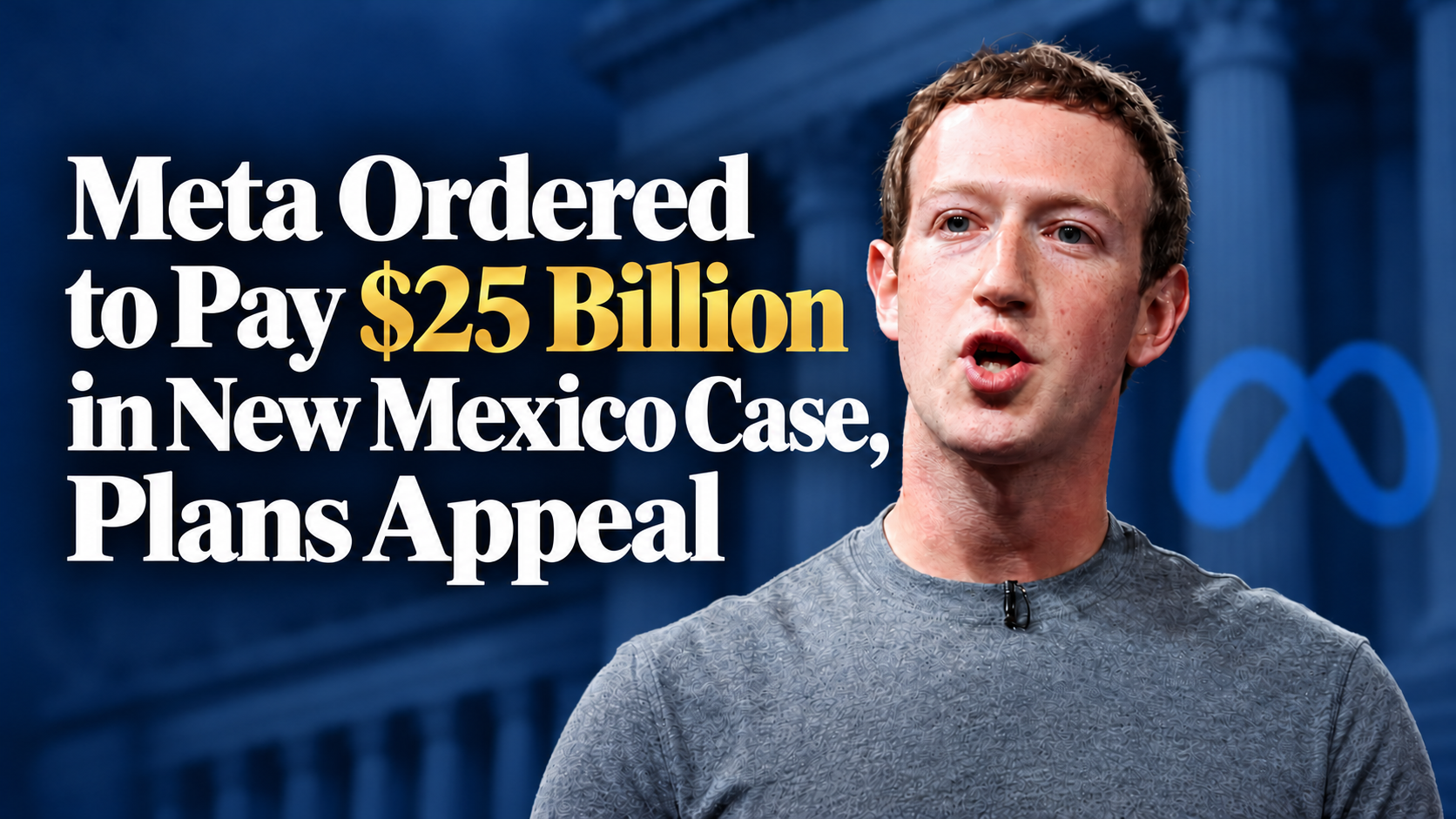
Image Source: Instagram
Quick Report: |
The ruling represents a major development in New Mexico’s independent consumer-protection case against Facebook. The state’s claims extended beyond the collection of data by Cambridge Analytica to whether Facebook accurately described its own practices to the public.
New Mexico Attorney General Raúl Torrez announced the penalty as a significant enforcement victory. Meta, meanwhile, maintains that the state’s approach improperly restricts speech and makes doing business in New Mexico difficult.
Why Did New Mexico Sue Meta Over Facebook’s Privacy and Content Policies?
The ruling represents a major development in New Mexico’s independent consumer-protection case against Facebook. The state’s claims extended beyond the collection of data by Cambridge Analytica to whether Facebook accurately described its own practices to the public.
New Mexico Attorney General Raúl Torrez announced the penalty as a significant enforcement victory. Meta, meanwhile, maintains that the state’s approach improperly restricts speech and makes doing business in New Mexico difficult.
What Did the Jury Decide in New Mexico’s Case Against Meta?
On September 25, jurors found that 26 of 29 statements by Facebook and its leadership were misleading. The verdict resulted in more than 43 million consumer-protection violations.
That total reflected the audiences attributed to the statements, including Facebook users and New Mexico residents. It did not mean that 43 million separate people brought lawsuits against Meta.
The proceedings separated two questions: whether Facebook violated the law and what financial consequences should follow. The jury established liability; the subsequent penalty proceedings determined how much the company would be ordered to pay. This was a civil consumer-protection action, not a criminal prosecution.
How Did the Judge Arrive at Meta’s $25 Billion Civil Penalty?
Judge Francis Mathew, of New Mexico’s First Judicial District Court, applied the maximum statutory penalty of $5,000 per violation, producing an initial total of approximately $219 billion. He then reduced the award to $25 billion.
The state had requested between $35 billion and $40 billion. In explaining the substantial penalty, the judge emphasized that Facebook’s misleading statements were intentional, repeated, and connected to its core business practices.
The award also carries annual interest of 15% until paid, adding a significant financial consequence while the dispute continues.
Why Does Meta Dispute the New Mexico Ruling, and Does It Plan to Appeal?
Meta has challenged both the basis for the state’s case and the size of the requested penalty.
Its lawyers argued that New Mexico had not established actual harm from the disputed statements. They also contended that a substantially larger penalty than the roughly $3.4 billion they proposed would violate constitutional due-process protections. Those were Meta’s arguments against the award, rather than findings adopted by the court.
Following the ruling, Chief Legal Officer C.J. Mahoney said Meta was confident it would prevail on appeal. He also characterized the enforcement action as an attempt to regulate online speech through financial penalties.
Meta’s stated intention to appeal should be distinguished from a completed appellate filing. The reporting reviewed for this article establishes the company’s plans but does not identify a filed notice of appeal from the October 21 penalty order or an appellate decision reviewing that order.
Will Facebook Users Receive Payments From the $25 Billion Penalty?
The award is a civil penalty payable to New Mexico, rather than a settlement fund offering individual payments to Facebook users.
According to the state attorney general, proceeds from these consumer-protection penalties are directed to education under New Mexico’s constitutional requirements. Torrez also acknowledged that an anticipated appeal could delay the state’s receipt of the money.
The order therefore should not be described as money already collected or as a new Facebook settlement that users can apply to claim.
Is the $25 Billion New Mexico Penalty the Same as Meta’s Youth-Safety Settlement?
No. This penalty concerns New Mexico’s Cambridge Analytica-related consumer-deception case.
Brownstone Law previously reported on Meta’s proposed agreement to pay up to $17.1 billion and introduce youth safeguards to resolve states’ social-media claims. That coverage addressed allegations involving young users, platform safety and child privacy. The October 21 penalty is not an increase to that proposed settlement.
New Mexico also obtained separate relief against Meta earlier in 2026 in litigation concerning young users’ safety: $375 million in civil penalties and an additional $567 million for a fund addressing teen mental health. Those amounts belong to a different proceeding and should not be confused with the $25 billion privacy and consumer-deception award.
Disclaimer: This article provides general information and does not constitute legal advice. It describes a civil penalty ruling and Meta’s announced intention to appeal. Further court proceedings may affect the judgment and its enforcement.