Last Updated: August 14, 2026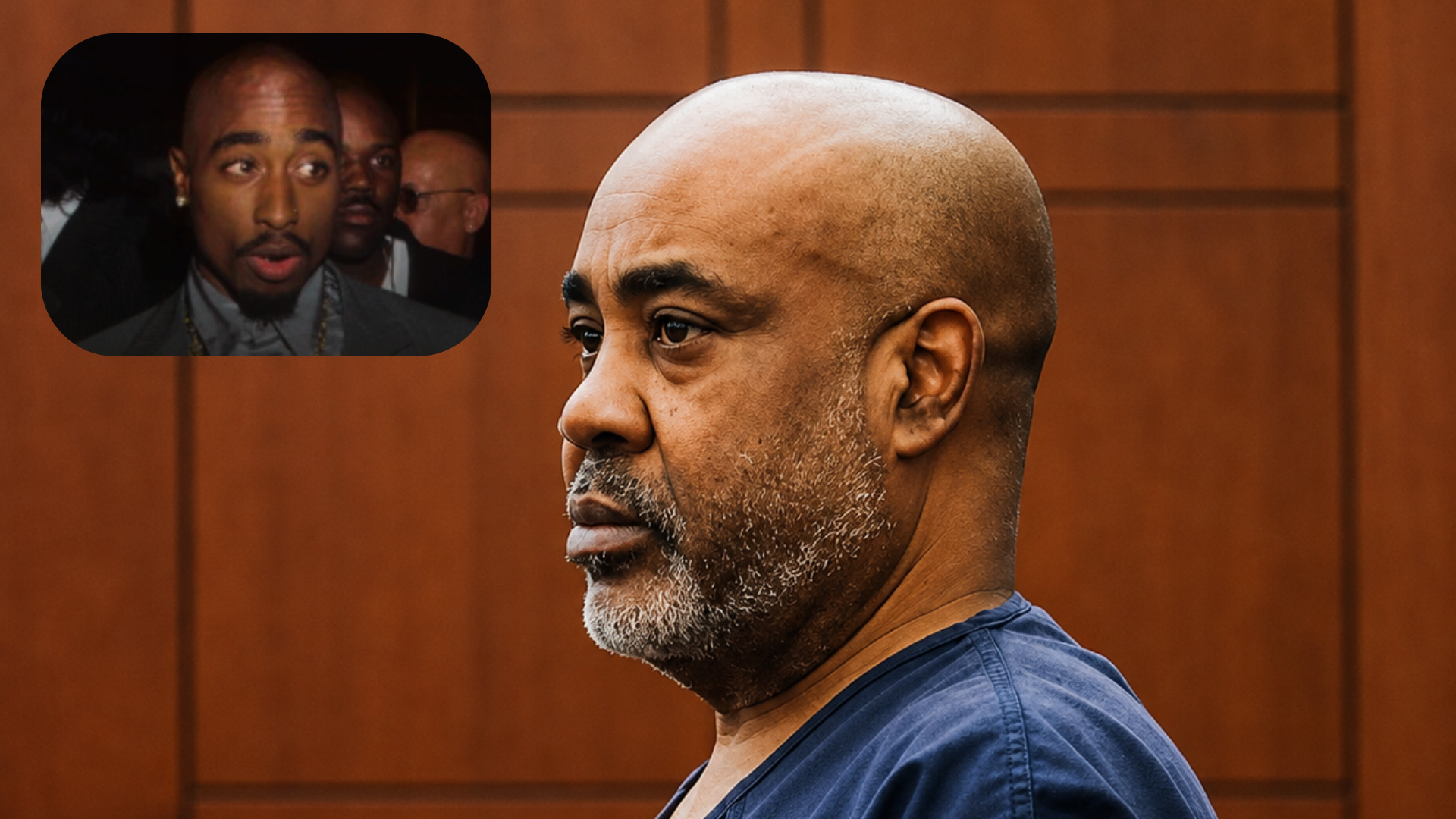
| Quick Report: A jury has been seated in Las Vegas for the murder trial of Duane “Keffe D” Davis, who is accused of orchestrating the 1996 drive-by shooting that killed rapper Tupac Shakur. Prosecutors do not accuse Davis of firing the fatal shots but allege that he helped organize the attack and provided the firearm. Davis has pleaded not guilty. Opening statements are expected to begin August 17. |
A jury has been selected for the long-awaited trial of Duane “Keffe D” Davis, the only person charged in connection with the 1996 killing of rapper Tupac Shakur.
Sixteen people have been selected for the trial in Clark County District Court in Las Vegas. The panel consists of 12 jurors and four alternates, all of whom will sit through the proceedings, with the 12 jurors ultimately expected to deliberate. Opening statements are scheduled to begin Monday, August 17, and the trial is expected to last several weeks.
Davis, 63, has pleaded not guilty to murder with a deadly weapon with the intent to promote, further, or assist a criminal gang. He is presumed innocent unless and until proven guilty beyond a reasonable doubt.
What Is the Case Against Duane “Keffe D” Davis?
Shakur was shot on September 7, 1996, while riding in a BMW driven by Death Row Records co-founder Marion “Suge” Knight near the Las Vegas Strip. A white Cadillac pulled alongside the BMW and gunfire erupted. Shakur, who was 25, died from his injuries six days later. Knight survived the shooting.
Prosecutors allege that Davis played a central role in organizing the attack. Authorities have described him as the alleged “shot caller” who made decisions leading to the shooting and supplied the firearm used in the attack. Davis is not accused of personally firing the shots that killed Shakur.
The distinction is significant because Nevada law does not limit criminal responsibility to the person who physically commits an offense. Under NRS 195.020, a person who aids, abets, counsels, encourages, hires, commands, induces or procures another person in the commission of an offense may be treated as a principal.
Accordingly, prosecutors do not necessarily have to prove that Davis personally pulled the trigger to obtain a murder conviction. They must, however, prove beyond a reasonable doubt the elements necessary to establish his criminal responsibility under the charged offense and the prosecution’s applicable theory of liability.
Davis’ Memoir and Previous Statements Could Play a Major Role at Trial
The investigation into Shakur’s killing remained unresolved for decades before Davis was arrested and charged in 2023. Davis had publicly discussed the shooting in interviews and in his 2019 memoir, Compton Street Legend. Prosecutors have relied in part on statements in which Davis described being inside the Cadillac associated with the shooting and providing the firearm used in the attack.
Those statements have already been the subject of significant pretrial litigation.
Davis’ attorneys sought to prevent prosecutors from using portions of his memoir and statements he made during a 2008 law-enforcement interview. The defense argued that the book had been fictionalized and had a co-author, while also maintaining that Davis’ earlier interview with law enforcement was supposed to remain confidential and should not be used against him.
Judge Carli Kierny rejected the defense efforts to exclude the disputed material. She ruled that the memoir could be used at trial and separately determined that the recording of Davis’ 2008 interview was admissible. Those rulings allow prosecutors to present the challenged statements as part of their case, although the defense remains free to dispute their meaning, reliability and significance before the jury.
What Happens Next in the Tupac Shakur Murder Trial?
With jury selection complete, the case now moves to opening statements and the presentation of evidence.
Prosecutors expect to call approximately 35 to 45 witnesses, ranging from people who saw Shakur shortly before the shooting to individuals who were associated with Shakur and Davis at the time.
Suge Knight, who was driving the BMW when Shakur was shot, is among those who could potentially be called to testify. Knight has repeatedly indicated that he does not want to participate in the trial. Attorneys have also said that Sean “Diddy” Combs will not be among the prosecution’s witnesses.
Opening statements are expected on August 17, after which prosecutors will begin presenting evidence in support of the charge. Davis’ attorneys will have the opportunity to challenge that evidence, cross-examine prosecution witnesses, and present the defense case.
The jury will ultimately be asked to determine whether prosecutors have proven the charge against Davis beyond a reasonable doubt.
Disclaimer: This article is for general informational purposes only and reports on an ongoing criminal proceeding. Duane Davis has pleaded not guilty and is presumed innocent unless and until proven guilty in court. Allegations described in this article are allegations made by prosecutors and should not be treated as established facts. Trial rulings, evidence, and subsequent proceedings may affect the case. This article does not constitute legal advice.