Last Updated: November 3, 2026
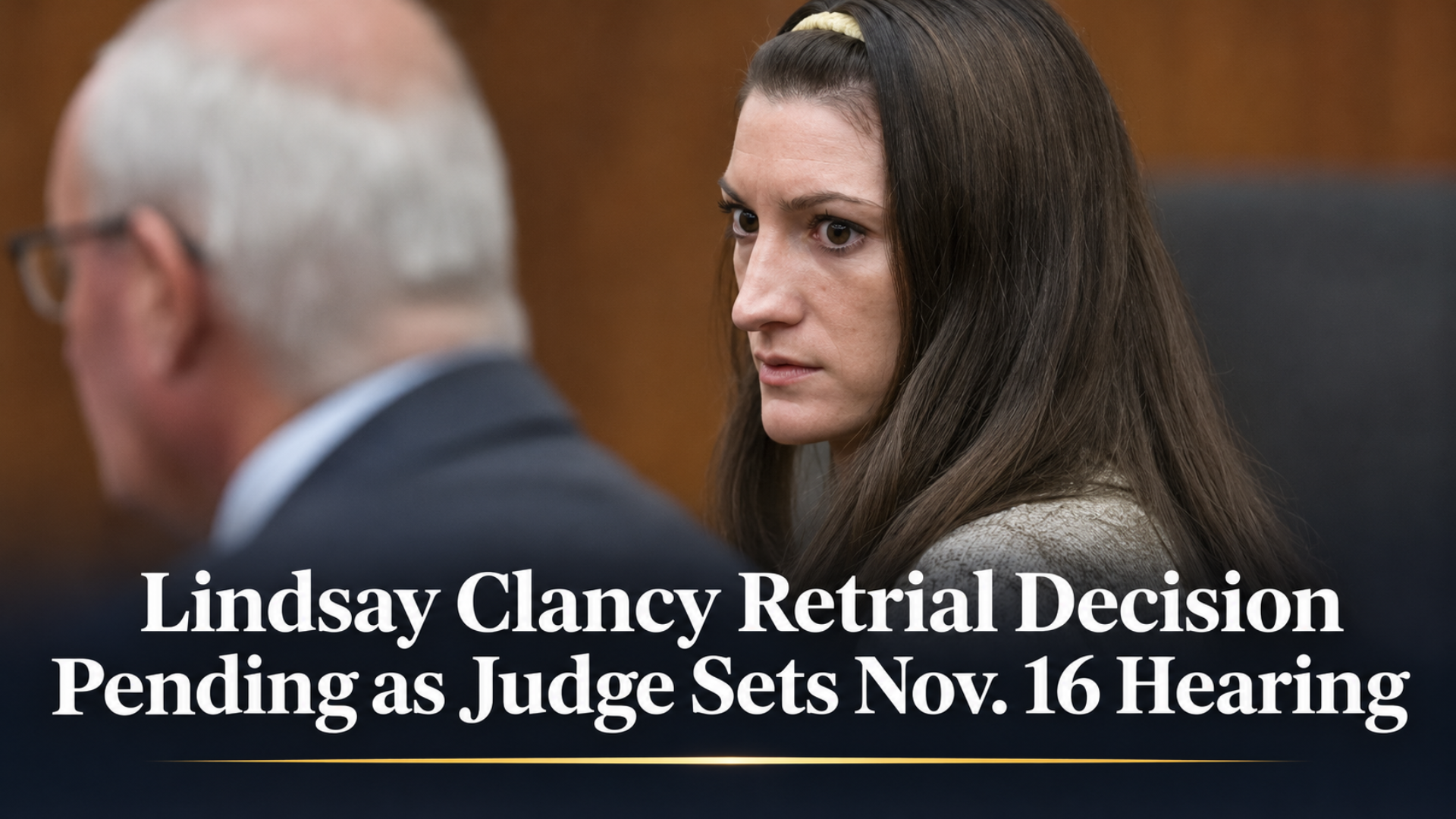
Image Source: Instagram
| Quick Report: A Massachusetts judge heard arguments on November 2 concerning Lindsay Clancy’s motion to dismiss her murder charges on double-jeopardy grounds but did not issue a ruling. Assistant District Attorney Jennifer Sprague indicated that prosecutors expect to pursue another trial if the case proceeds, although they have not determined which charges they would seek. Judge William Sullivan scheduled another hearing for November 16 and suggested that March 2027 could be a realistic time for a retrial. No new trial date has been set. |
Judge Leaves Double-Jeopardy Motion Unresolved
Judge William Sullivan heard arguments in Plymouth Superior Court on November 2 over whether Lindsay Clancy can face another trial following the September mistrial in her Massachusetts murder case.
Clancy’s attorneys are seeking dismissal of the charges, arguing that the first trial ended without the legal necessity required to permit another prosecution.
Attorney Martin Weinberg, who is handling Clancy’s constitutional litigation, maintained that the court should have investigated concerns about a holdout juror more thoroughly before declaring a mistrial.
The defense argued that additional questioning could have helped determine whether the juror was following the court’s instructions and whether deliberations could have continued.
Prosecutors opposed that position, arguing that the jury was genuinely deadlocked and that additional questioning could have improperly interfered with confidential deliberations.
Sullivan did not decide the double-jeopardy motion during the hearing. The arguments remain under consideration, and Clancy’s request to dismiss the charges is still pending.
Prosecutors Indicate Retrial but Leave Charges Undecided
A significant development during the November 2 hearing concerned whether prosecutors intend to pursue another trial.
Assistant District Attorney Jennifer Sprague indicated that the Commonwealth expects to retry Clancy if the case proceeds. However, she did not provide a definitive decision about which charges prosecutors would pursue.
The prosecution has not publicly committed to retrying Clancy on the same three first-degree murder charges or proceeding with lesser charges.
Sprague explained that the prosecution’s next steps would depend partly on the court’s rulings on outstanding motions.
Defense attorney Kevin Reddington questioned why prosecutors had not clarified their position despite the time that had passed since the mistrial.
The exchange highlighted the uncertainty surrounding the case’s next stage.
Although prosecutors indicated an intention to pursue another trial, that does not mean a retrial has been formally scheduled or that the court has rejected the pending double-jeopardy challenge.
Defense Presses for Prompt Decision and Trial Schedule
Reddington urged the court to resolve the outstanding issues without further delay.
He expressed concern about Clancy remaining in custody while the parties await decisions on the dismissal motion and a possible second trial.
The defense also raised the issue of Sullivan’s expected retirement in June 2027.
Reddington indicated that, if a retrial becomes necessary, he wants Sullivan to continue presiding over the case and the proceedings to begin in the spring.
Sullivan suggested that March 2027 could be a realistic period for another trial.
However, the judge did not set a trial date during the November 2 hearing.
Any scheduling decision remains dependent on the court’s consideration of the pending motions and the prosecution’s next steps.
Court Also Considers Request to Restrict Public Statements
The November 2 hearing also addressed a prosecution request to restrict certain public statements by attorneys involved in the case.
Prosecutors argued that comments made outside the courtroom could influence potential jurors and affect the fairness of any future trial.
They raised concerns about public remarks by Reddington concerning the holdout juror and the proceedings following the mistrial.
The defense opposed the proposed restrictions and challenged whether such an order was justified.
Sullivan did not issue an immediate ruling on the request.
The motion concerning public statements is separate from Clancy’s double-jeopardy challenge, although both could affect how the criminal proceedings move forward.
Earlier Juror Dispute Remains Central to Defense Challenge
Clancy’s first murder trial ended in a mistrial on September 4, 2026, after jurors could not reach a unanimous verdict. Jurors subsequently reported an 11-1 division, with the majority favoring a finding of not guilty by reason of lack of criminal responsibility.
The defense has questioned whether the judge should have examined concerns about the lone holdout juror more extensively before ending the trial.
Brownstone Law previously covered Judge Sullivan’s October 21 decision denying further examination of the holdout juror and the 13-page reply filed by Clancy’s defense on October 28 supporting her double-jeopardy dismissal motion.
In the October 21 ruling, Sullivan rejected requests for additional questioning and access to information concerning the holdout juror. The judge concluded that further inquiry could improperly intrude into confidential jury deliberations.
During the November 2 hearing, Weinberg continued to argue that the court should have investigated the juror-related concerns before declaring a mistrial.
Prosecutors maintained that the holdout juror’s disagreement with other jurors did not establish misconduct or justify further interference with deliberations.
The court has not found that the holdout juror engaged in misconduct, and the defense’s objections to the mistrial remain unresolved.
Murder Charges Stem From Deaths of Three Children
Clancy faces three first-degree murder charges in connection with the January 24, 2023, deaths of her children, Cora, 5, Dawson, 3, and Callan, 8 months old, in Duxbury, Massachusetts.
Her defense maintains that she was experiencing severe mental illness, including alleged postpartum psychosis, and lacked criminal responsibility at the time of the deaths.
Prosecutors have disputed that defense, arguing that Clancy acted deliberately and understood the wrongfulness of her actions.
During the first trial, jurors were unable to reach a unanimous decision on whether Clancy was criminally responsible.
The resulting mistrial produced neither a conviction nor an acquittal.
Clancy’s attorneys are now arguing that another prosecution would violate constitutional protections against double jeopardy because, in their view, the mistrial was not legally necessary.
Under established double-jeopardy principles, a genuinely deadlocked jury can justify a mistrial and permit another trial. The dispute in Clancy’s case concerns whether the circumstances satisfied that legal standard.
What Happens Next?
Clancy’s next hearing is scheduled for November 16, 2026, in Plymouth Superior Court.
Judge Sullivan is expected to revisit the outstanding motions, including the defense’s request to dismiss the murder charges on double-jeopardy grounds.
The court may also address the prosecution’s request to restrict public statements and consider scheduling another trial if the case is allowed to proceed.
Sullivan has suggested March 2027 as a possible retrial period, but that date remains tentative.
If the double-jeopardy motion is granted, the ruling could prevent further prosecution on the affected charges, subject to any available appellate review.
If the motion is denied, the case may move toward another trial. Clancy’s attorneys could also pursue appellate review under applicable Massachusetts procedures.
Prosecutors have indicated that they expect to pursue another trial if permitted, although the precise charges have not been finalized publicly.
As of November 3, no ruling dismissing the murder charges has been reported, and no retrial date has been formally established.
Disclaimer: This article provides general information and does not constitute legal advice. It reflects publicly available reporting reviewed through November 3, 2026. Arguments concerning juror misconduct, manifest necessity, and double jeopardy are disputed legal positions, not established judicial findings. The November 2 hearing did not resolve Clancy’s dismissal motion or determine whether she may be retried.