Last Updated: September 8, 2026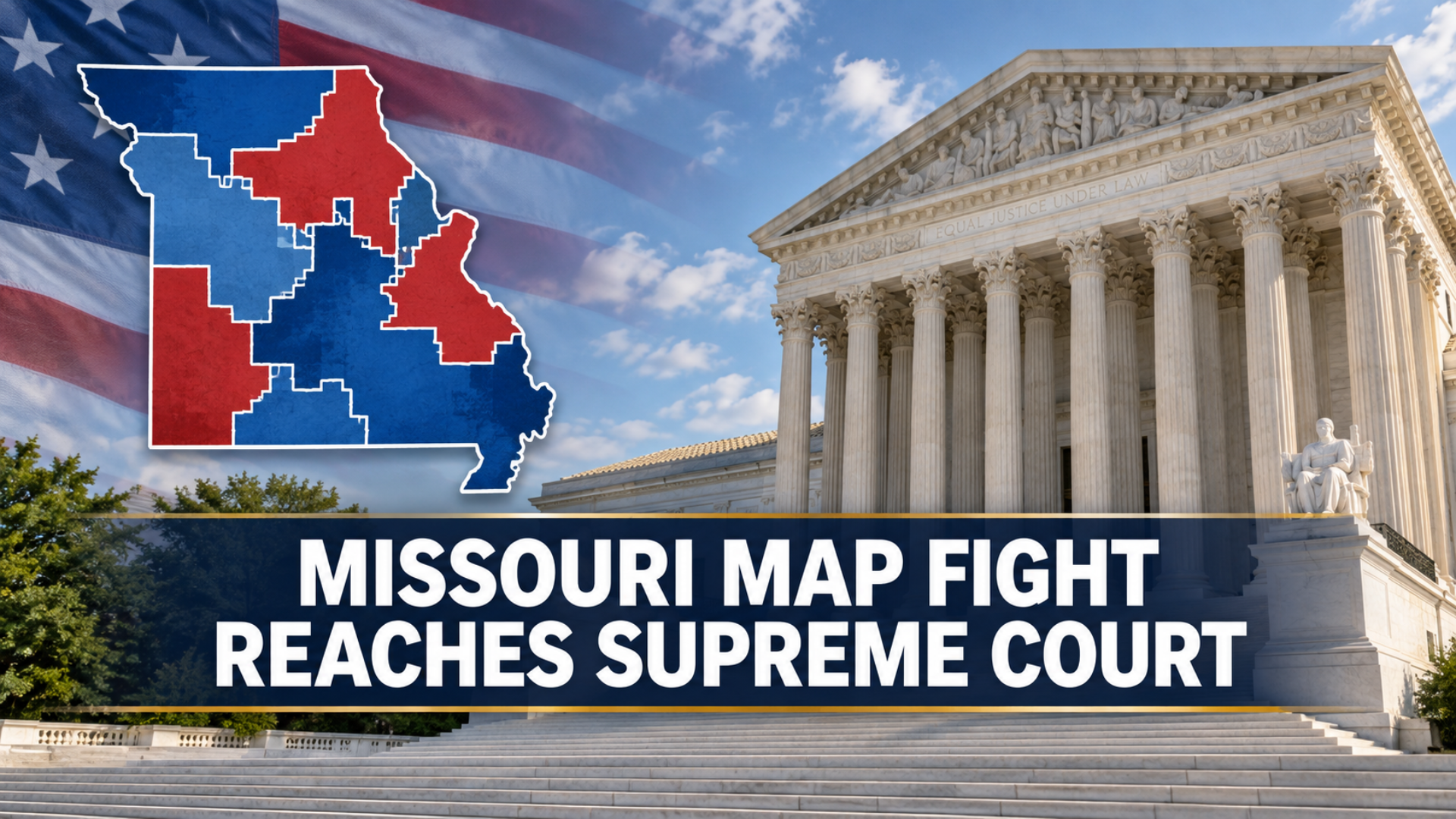
| Quick Report: Missouri has asked the U.S. Supreme Court for emergency relief that would allow the state to use a Republican-backed congressional map in the November 2026 midterm elections. The request follows a Missouri Supreme Court decision prohibiting the map’s use unless and until voters approve it through a statewide referendum. Missouri argues that changing maps after conducting its August primary under the new districts would disrupt the election and interfere with approaching ballot deadlines. |
Missouri has taken its congressional redistricting dispute to the U.S. Supreme Court, asking the justices to temporarily block a state court ruling that prevents the use of a Republican-backed congressional map in the November 2026 elections.
Missouri Secretary of State Denny Hoskins filed an emergency application seeking a stay of the Missouri Supreme Court’s September 3 decision. The filing asks the U.S. Supreme Court to permit the state to continue using the congressional districts established by House Bill 1 while further review is pursued.
Missouri conducted its August 4 primary election under the new districts. State officials now argue that reverting to the congressional map adopted in 2022 for the general election would create confusion for candidates, voters and election administrators.
The U.S. Supreme Court has not yet ruled on Missouri’s emergency application. The new map therefore remains blocked under the Missouri Supreme Court’s ruling.
Missouri Supreme Court Blocked the New Congressional Map
Missouri’s Republican-led General Assembly passed House Bill 1 in September 2025. The legislation established new boundaries for the state’s eight congressional districts and was subsequently signed into law by Republican Governor Mike Kehoe.
The redistricting plan changed the boundaries of the Kansas City-area 5th Congressional District, which is represented by Democratic Rep. Emanuel Cleaver. The new boundaries were expected to improve Republican prospects of gaining an additional seat in Missouri’s congressional delegation.
Opponents of the map organized a referendum campaign seeking to give Missouri voters the opportunity to approve or reject House Bill 1. The group People Not Politicians submitted more than 300,000 signatures supporting the referendum petition.
Secretary of State Hoskins rejected the petition in August 2026. He concluded that Missouri’s constitution did not permit voters to use the referendum process to suspend a congressional redistricting law.
The Missouri Supreme Court unanimously reversed that determination on September 3. It ordered Hoskins to certify the referendum petition as sufficient and place the measure on the November 2026 ballot.
The court also prohibited the state from using the House Bill 1 congressional districts unless and until voters approve them. Under the ruling, Missouri’s previous congressional districts, established in 2022 following the 2020 census, remain in effect for the 2026 general election.
Missouri Seeks Emergency Relief From the U.S. Supreme Court
After the Missouri Supreme Court declined to pause its decision, Hoskins filed an emergency application with the U.S. Supreme Court.
Missouri is asking the justices to stay the state court’s injunction and allow the House Bill 1 map to be used while the state pursues further appellate review.
The emergency application argues that the Missouri Supreme Court’s ruling requires the state to use different congressional districts for the primary and general elections.
According to Missouri, that change could leave some voters choosing between candidates whom they did not have an opportunity to nominate during the primary.
State officials also contend that election administrators may be unable to complete the required changes before ballots must be sent to military and overseas voters. Federal law generally requires those ballots to be transmitted at least 45 days before a federal election.
These are arguments presented by Missouri in support of its emergency application. The U.S. Supreme Court has not determined that the Missouri Supreme Court’s ruling violates federal election law or the Constitution.
Missouri Raises Federal Constitutional Arguments
Missouri’s application argues that the state court’s order conflicts with several provisions of federal law and the U.S. Constitution.
The state contends that the ruling improperly interferes with the Missouri General Assembly’s authority to regulate congressional elections under the Elections Clause. It also argues that changing maps after the primary could effectively nullify votes cast by people who participated in nominating candidates under the House Bill 1 districts.
The filing further raises arguments involving Article I’s protections for congressional elections, the Equal Protection Clause and federal requirements governing ballots for military and overseas voters.
Missouri also relies on the principle that courts should exercise caution before ordering changes to election rules close to an election. The state argues that the timing of the Missouri Supreme Court’s decision makes compliance particularly difficult because the primary election has already taken place.
The Supreme Court has not ruled on the merits of any of these claims. At this stage, Missouri is requesting temporary relief while it seeks further review of the state court’s judgment.
Referendum Supporters Oppose Missouri’s Application
Richard von Glahn and supporters of the referendum have asked the U.S. Supreme Court to deny Missouri’s emergency request.
They argue that Missouri’s constitution gives voters the power to challenge legislation through the referendum process. According to the opponents, submitting a sufficient petition suspended House Bill 1 and prevented the new districts from taking effect unless approved by voters.
They also contend that the dispute resulted from Hoskins’ decision to reject the petition after delaying his determination until the day of the August primary.
The referendum supporters maintain that the Missouri Supreme Court properly applied state constitutional law when it certified the petition, placed the measure on the November ballot and restored the 2022 congressional districts.
Their opposition also disputes Missouri’s argument that using the previous map would violate federal law. The U.S. Supreme Court must now consider the competing positions when deciding whether temporary relief is warranted.
What Happens Next in the Missouri Map Dispute?
The emergency matter is listed at the U.S. Supreme Court as Hoskins v. von Glahn, No. 26A304.
Justice Brett Kavanaugh handles emergency applications arising from the Eighth Circuit, which includes Missouri. He requested a response from the referendum supporters before the Court considers Missouri’s request.
Missouri asked the Court to act quickly because of approaching election deadlines. The state specifically requested a decision by September 14, citing the September 19 deadline for transmitting ballots to military and overseas voters.
The Supreme Court may grant the stay, deny the application or issue another temporary order while considering the dispute. Granting a stay would allow Missouri to use the House Bill 1 map while further proceedings continue.
Denying the application would leave the Missouri Supreme Court’s injunction in effect.
A decision on the emergency request would determine which congressional districts Missouri may use in the approaching general election. It would not necessarily resolve every underlying question concerning the state legislature’s redistricting authority or the public’s referendum power.
Disclaimer: This article is provided for general informational purposes and reports on ongoing election-related litigation. The constitutional and statutory claims described in Missouri’s emergency application remain disputed and have not been accepted by the U.S. Supreme Court. The Court has not restored the House Bill 1 map or issued a final ruling on the underlying dispute. This article does not constitute legal advice.