Last Updated: September 21, 2026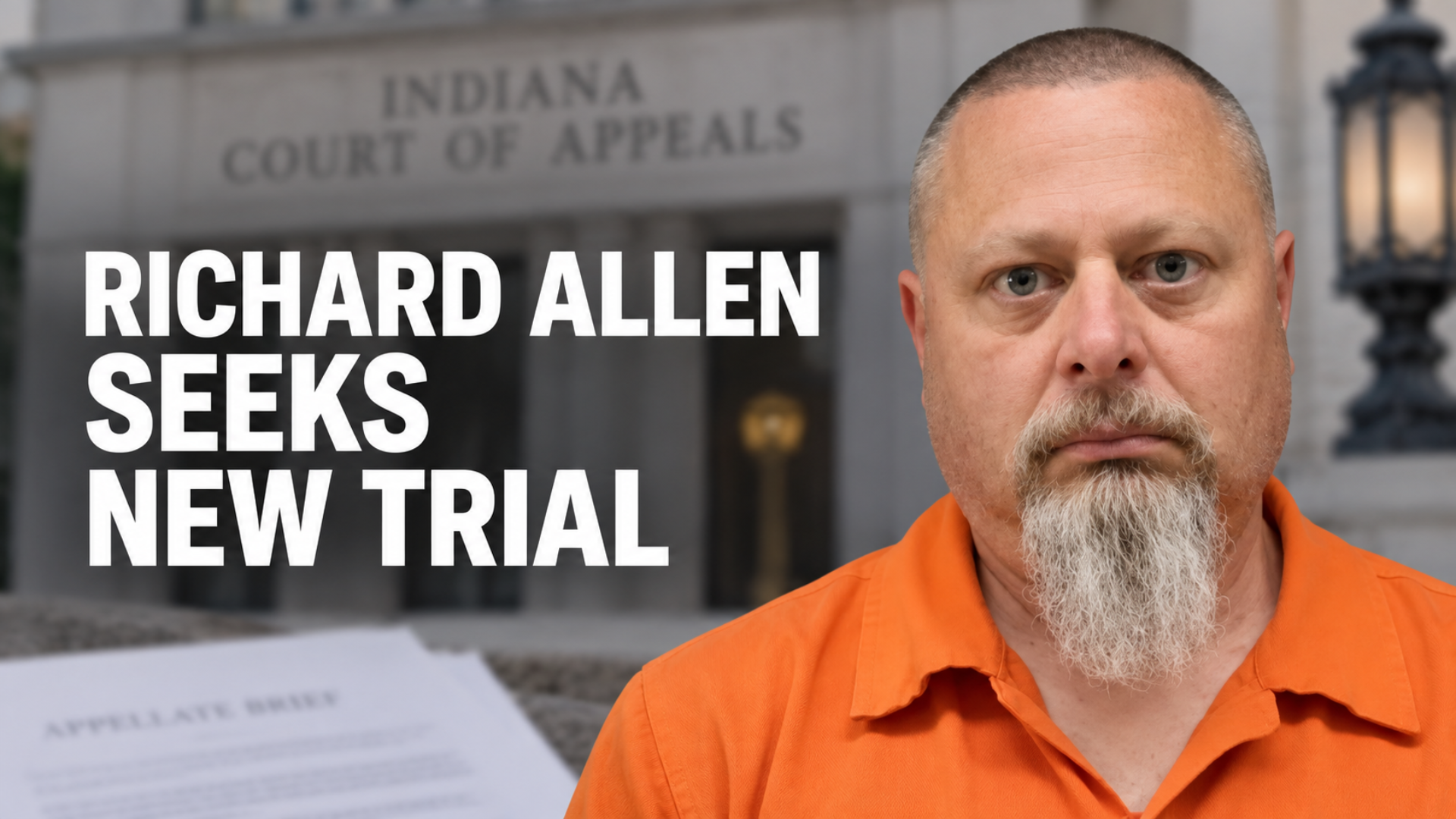
Image Source: Instagram
| Quick Report: Richard Allen is asking the Indiana Court of Appeals to overturn his convictions for the 2017 murders of teenagers Abigail Williams and Liberty German and grant him a new trial. His appellate attorneys argue that the trial court improperly excluded evidence supporting an alternative theory of the killings, restricted proposed expert testimony, and permitted the jury to consider confessions allegedly made while Allen was experiencing a severe psychological decline. Prosecutors maintain that the convictions were supported by Allen’s statements and other evidence. The appellate court has not ruled on his claims. |
Richard Allen is seeking a new trial after being convicted of killing two teenage girls near Delphi, Indiana, arguing that the jury did not hear evidence central to his defense.
Allen was convicted in November 2024 in the deaths of 13-year-old Abigail “Abby” Williams and 14-year-old Liberty “Libby” German. The girls disappeared while walking near the Monon High Bridge in February 2017 and were found dead the following day.
Allen received a combined sentence of 130 years. His appeal now asks the Indiana Court of Appeals to reverse the convictions and return the case for a new trial.
Defense Challenges Exclusion of Alternative-Suspect Evidence
A central appellate issue concerns the trial court’s decision to prevent Allen’s attorneys from presenting evidence supporting their alternative theory of the killings.
The defense sought to argue that other individuals may have committed the murders as part of a ritual associated with pagan or Norse religious beliefs. Allen’s attorneys contended that the positioning of the victims and objects found at the crime scene supported further consideration of that theory.
The trial judge excluded the proposed evidence after determining that the defense had not established an adequate connection between the suggested alternative suspects and the crimes.
Allen’s appellate attorneys argue that the ruling prevented him from presenting a complete defense. Prosecutors dispute that position and maintain that the proposed theory lacked sufficient evidentiary support.
The appeal does not establish that the killings were ritualistic or that any alternative suspect was responsible. Those assertions remain part of the defense’s disputed theory.
Appeal Questions Reliability of Allen’s Confessions
Allen’s appeal also challenges the use of statements in which he reportedly confessed to the killings while in custody.
The defense argues that Allen experienced a serious psychological deterioration while being held in restrictive conditions before trial. His attorneys contend that the statements were unreliable because they were made while he was suffering from psychosis and extreme mental distress.
At trial, prosecutors argued that Allen made incriminating statements on multiple occasions, including statements made before and after the most severe signs of his mental decline. They maintained that his confessions contained information supporting their reliability.
The jury ultimately heard evidence concerning Allen’s mental condition and the circumstances surrounding his statements before returning guilty verdicts. The appellate court must now consider whether the trial court committed a reversible legal error in its treatment of that evidence.
Ballistics Testimony Is Another Appellate Issue
Investigators recovered an unspent cartridge near the victims. Prosecutors presented evidence asserting that markings on the cartridge were consistent with it having been cycled through Allen’s handgun.
Allen’s defense challenged the reliability of that analysis. His appellate attorneys also question the trial court’s decision concerning proposed testimony from a defense ballistics expert.
The defense argues that limiting the expert evidence prevented the jury from fully evaluating the prosecution’s firearm-related evidence. Prosecutors maintain that the cartridge, together with Allen’s presence in the area, recorded statements, and other evidence, supported the case against him.
An appellate court generally does not retry a case or independently decide which witnesses were more credible. Its role is to determine whether the trial court made a legal error and, if so, whether that error affected the defendant’s substantial rights or the trial’s outcome.
What Happens Next in Richard Allen’s Appeal?
The Indiana Court of Appeals will review the trial record, the parties’ written arguments and the legal issues preserved for appeal. The court may also schedule oral arguments before issuing a decision.
The appellate court could affirm Allen’s convictions, reverse one or more convictions, order additional proceedings or grant other relief permitted under Indiana law. Filing an appeal does not automatically invalidate the jury’s verdict or entitle Allen to a new trial.
Unless an appellate court grants relief, Allen’s convictions and 130-year sentence remain in effect.
Disclaimer: This article is provided for general informational purposes and does not constitute legal advice. The appellate arguments described above are disputed claims presented by the defense and should not be treated as findings by the Indiana Court of Appeals. Allen’s convictions remain valid unless overturned or otherwise modified through the judicial process.