Last Updated: September 10, 2026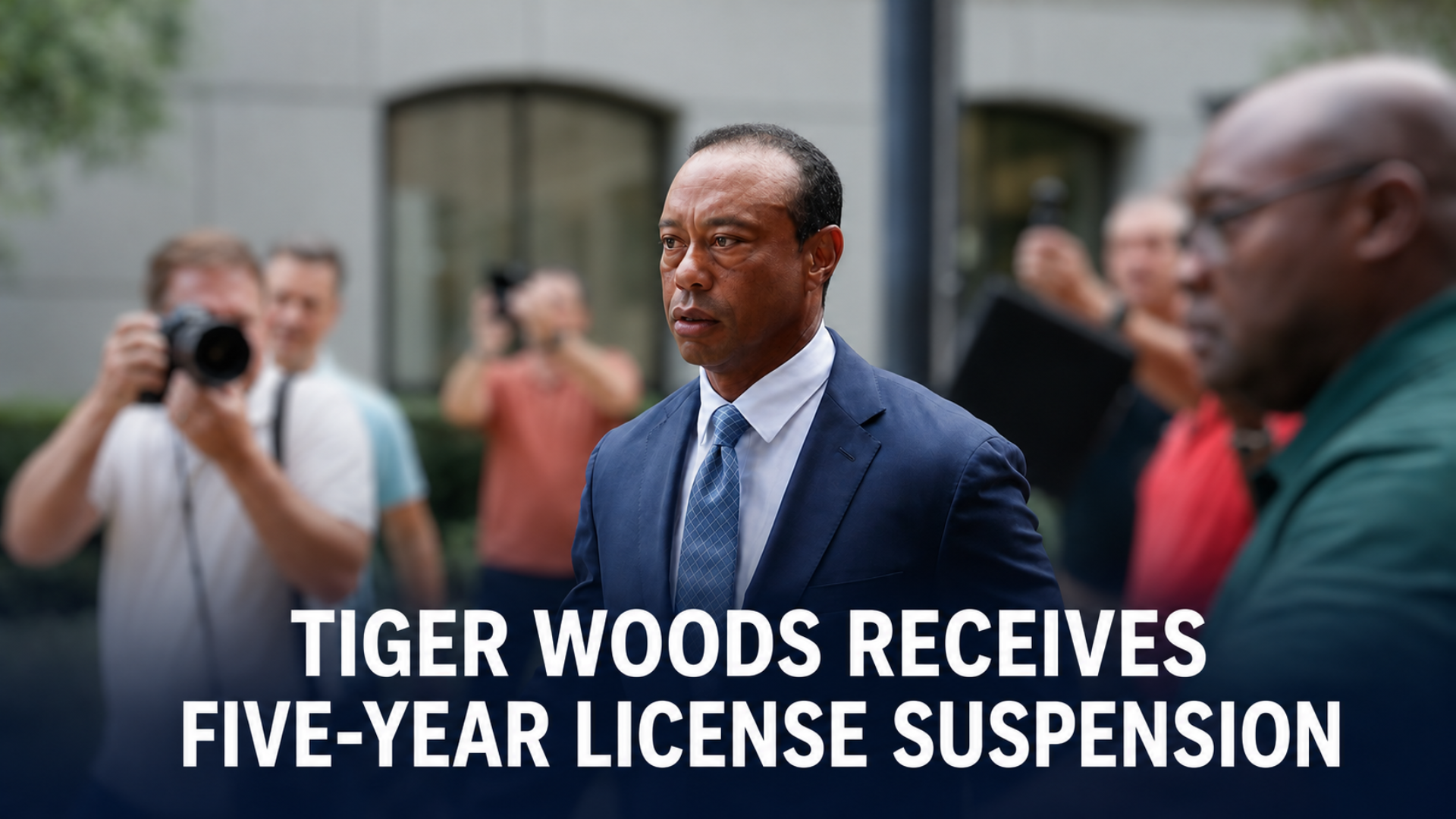
Image Source: Instagram
| Quick Report: Tiger Woods has received a five-year driver’s license suspension and approximately $1,500 in fines after resolving charges arising from a March 2026 rollover crash in Florida. During a September 2 change-of-plea hearing, Woods entered no-contest pleas after prosecutors reduced the more serious impaired-driving charge. The court adjudicated him guilty on the amended charges and imposed concurrent five-year license suspensions. The plea agreement allows the professional golfer to avoid jail time. |
Tiger Woods will lose his driving privileges for five years after resolving his Florida impaired-driving case through a plea agreement.
Woods appeared before Martin County Judge Darren Steele on September 2 and entered no-contest pleas to the amended charges. Under the agreement, the original DUI charge was reduced to reckless driving, second offense, while the separate refusal-to-submit-to-a-lawful-test charge was reduced to a careless-driving citation. The court adjudicated Woods guilty and imposed five-year driver’s license suspensions on both charges, with the suspensions running concurrently.
The 50-year-old golfer was also ordered to pay approximately $1,500 in fines. He did not receive a jail sentence under the negotiated resolution.
Judge Steele warned Woods that the suspension does not contain an exception allowing him to drive under limited circumstances. The judge told him that driving during the suspension could result in his immediate return to jail.
Plea Deal Resolves Charges Arising From March Crash
The case arose from a March 27, 2026, crash near Woods’ home on Jupiter Island, Florida.
According to the arrest affidavit, Woods was driving a Land Rover when he attempted to pass a slowing truck and collided with a trailer being pulled by the vehicle. Woods’ SUV overturned during the crash. No injuries were reported.
Woods told investigators that he had been looking at his cellphone and changing the radio station and did not notice that the vehicle ahead of him had slowed.
Responding officers reported observing signs that caused them to suspect impairment. Woods passed a breath test for alcohol but declined to provide a urine sample for drug testing. Deputies also reported finding two hydrocodone pills in his possession.
Woods initially pleaded not guilty to the charges.
Prosecutors Reduce the Impaired-Driving Charge
The original case included a charge of driving under the influence. Prosecutors later reduced that charge after reviewing the available evidence, including Woods’ medical and prescription records.
State Attorney Thomas Bakkedahl said toxicologists determined that the evidence was insufficient to prove beyond a reasonable doubt that Woods was impaired by medication at the time of the crash. Woods has undergone numerous surgeries during his career and has been prescribed medication for pain and injuries.
Under the plea agreement, the DUI charge was amended to reckless driving, second offense.
The separate charge involving Woods’ refusal to submit to a lawful test was reduced to a careless-driving citation.
The amended charges carried separate five-year license suspensions. Because Judge Steele ordered the suspensions to run concurrently, Woods will serve a total suspension period of five years rather than 10.
Woods Enters No-Contest Pleas
Woods resolved the charges by entering no-contest pleas during the change-of-plea hearing.
A no-contest plea, also known as a nolo contendere plea, means that a defendant does not formally admit or deny the allegations but accepts the court’s judgment and punishment. A no-contest plea can be treated similarly to a guilty plea for purposes of entering a conviction and imposing a sentence.
| Do You Know? A no-contest plea does not necessarily amount to a formal admission of the allegations, but it can still result in a conviction and criminal sentence. It may also limit the issues that the defendant can later challenge on appeal. To understand how this plea works, read our guide on what it means to plead no contest, its legal effects and appeal rights . |
Judge Steele questioned Woods during the hearing before accepting the pleas and entering the judgment.
The resolution means that Woods will not face a trial on the original impaired-driving accusation. It also allows him to avoid incarceration, provided that he complies with the court’s order and does not drive while his license is suspended.
Five-Year Suspension Contains No Driving Exception
The court imposed a five-year suspension on the reckless-driving charge and another five-year suspension on the careless-driving citation.
Both suspensions began at the same time and will expire together. Woods will not be permitted to drive under an exception that would otherwise allow limited driving during the suspension.
Judge Steele emphasized the restriction while addressing Woods directly. He warned Woods that if he drove for any reason during the suspension, he could be sent immediately back to jail.
Woods also has 30 days from the judgment to pursue any available appellate review. However, a negotiated no-contest plea can limit the issues that may subsequently be challenged compared with a conviction entered after a contested trial.
Case Ends Without Jail Sentence
The September 2 plea hearing resolves the criminal and traffic charges arising from the March rollover crash.
Woods will be required to pay the financial penalties imposed by the court and comply with the five-year suspension of his driving privileges. The disposition does not include a jail sentence.
The case is the latest driving-related legal matter involving the 15-time major golf champion. Woods previously entered a diversion program following a 2017 impaired-driving arrest and sustained serious injuries in a separate 2021 rollover crash in California.
Woods has undergone multiple surgeries throughout his professional career. His medical history and prescription records were considered during the investigation into the March crash, including prosecutors’ assessment of whether they could prove impairment beyond a reasonable doubt.
Disclaimer: This article is provided for general informational purposes and reports on publicly available court proceedings involving Tiger Woods. Woods entered no-contest pleas to amended charges, and the court imposed the judgment and penalties described above. A no-contest plea is not necessarily a formal admission of the underlying factual allegations. This article does not constitute legal advice.