Last Updated: September 4, 2026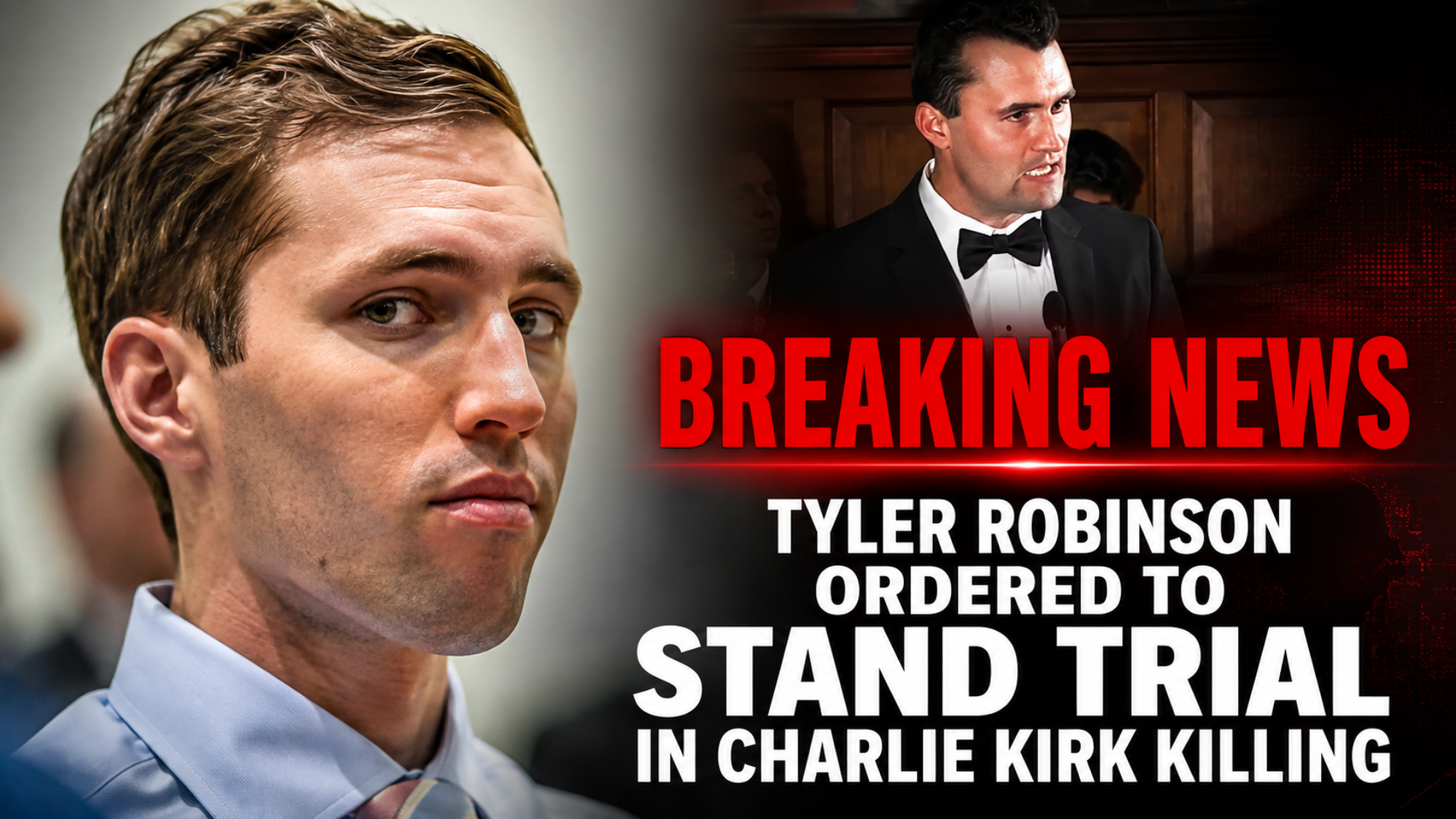
Image Source: Instagram
| Quick Report: A Utah judge has ruled that prosecutors presented sufficient evidence for Tyler Robinson to stand trial on all seven charges filed against him in connection with the September 2025 fatal shooting of Charlie Kirk at Utah Valley University. Fourth District Judge Tony Graf found probable cause to allow the aggravated-murder charge to proceed, including the allegation that the shooting created a great risk of death to others. Robinson pleaded not guilty to all seven charges following the ruling. Prosecutors are seeking the death penalty, which remains a possible punishment if Robinson is convicted of aggravated murder. A hearing is scheduled for October 23 to set a trial date. |
Tyler Robinson will stand trial on aggravated murder and six additional charges stemming from the fatal shooting of conservative activist Charlie Kirk after a Utah judge ruled that prosecutors had presented enough evidence for the criminal case to move forward.
Fourth District Judge Tony Graf issued the ruling on September 1 following a multi-day preliminary hearing held in July and subsequent arguments over whether the evidence established probable cause for the charges.
Robinson, 23, then pleaded not guilty to all seven counts against him. The ruling does not constitute a finding that Robinson is guilty. At this stage of the proceeding, the court was determining whether prosecutors had presented sufficient evidence to require him to stand trial, not whether the charges had been proven beyond a reasonable doubt.
Kirk, 31, co-founder of Turning Point USA, was fatally shot on September 10, 2025, while speaking at an outdoor event at Utah Valley University in Orem, Utah. Prosecutors allege Robinson fired a single shot from the rooftop of a nearby campus building while more than 3,000 people were attending the event.
Judge Finds Probable Cause on All Seven Charges
Robinson was formally charged in September 2025 with seven criminal counts:
1. aggravated murder, a capital felony;
2. felony discharge of a firearm causing serious bodily injury;
3. two counts of obstruction of justice;
4. two counts of tampering with a witness; and
5. committing a violent offense in the presence of a child.
The charging document also includes allegations related to Robinson’s alleged selection of Kirk because of Kirk’s political expression. Those allegations remain matters for the criminal proceedings and have not been established by a trial verdict.
The most significant issue addressed during the September 1 proceeding involved the aggravated-murder charge and whether prosecutors had shown sufficient evidence that the shooting created a great risk of death to another person besides Kirk and Robinson.
That circumstance is specifically alleged in the state’s aggravated-murder count and is important because prosecutors have announced their intention to pursue the death penalty.
Judge Graf concluded that the prosecution had met the probable-cause threshold necessary for the aggravated-murder charge and the remaining counts to proceed toward trial
Prosecutors Say Shooting Created Risk to Others at the Event
During arguments, prosecutors focused heavily on the location and circumstances of the shooting.
Prosecutors said Robinson allegedly fired from a rooftop more than 400 feet away while Kirk was surrounded by security personnel and an audience numbering more than 3,000 people.
Deputy Utah County Attorney Ryan McBride argued that the alleged shooter would have been able to see the large crowd from the rooftop position before firing. Prosecutors also pointed to the presence of Kirk’s security personnel near him and argued that firing into the area created a risk of death to people other than Kirk.
The prosecution also argued that the rifle contained additional rounds, which it cited as part of its argument concerning the potential danger to others.
These assertions remain part of the prosecution’s case and must still be proven under the applicable standards at trial.
Defense Argued That Kirk Was the Only Person Endangered
Robinson’s attorneys challenged the state’s attempt to maintain the aggravated-murder allegation that makes capital punishment possible.
The defense emphasized that only one shot was fired, that Kirk was the person struck and that the shooter did not fire additional rounds.
Defense attorney Staci Visser argued that the evidence did not establish that other people were placed at the level of risk required to support the state’s aggravated-murder theory.
The defense had urged the court not to allow the capital allegation to proceed on that basis. Judge Graf rejected the argument at the preliminary-hearing stage and found sufficient evidence for the issue to be considered as the case moves toward trial.
The ruling does not prevent Robinson’s lawyers from challenging the prosecution’s evidence or its legal theories at trial.
Evidence Presented During the Preliminary Hearing
Prosecutors presented several categories of evidence during the preliminary proceedings that they contend connect Robinson to the shooting.
Investigators testified about surveillance footage that prosecutors say showed Robinson on the Utah Valley University campus and later in a rooftop position associated with the shooting.
Prosecutors also presented DNA evidence that investigators said linked Robinson to a bolt-action rifle recovered after the shooting and to a tool allegedly used to engrave ammunition.
The state further relied on an alleged handwritten note and electronic communications that prosecutors attribute to Robinson. Prosecutors contend those communications contain statements connecting him to Kirk’s death and indicating a possible motive.
Robinson’s defense has challenged aspects of the prosecution’s evidence, including the reliability and interpretation of the DNA evidence and the state’s claim that Robinson targeted Kirk because of his political views. Those disputes remain unresolved and will be litigated as the case proceeds.
| A preliminary hearing does not determine whether a defendant is guilty. It allows the judge to decide whether the prosecution has presented sufficient evidence for the charges to proceed. For a detailed explanation of this stage, read Brownstone Law’s guide to what happens at a preliminary hearing and what comes next . |
Why the Death Penalty Remains Possible
The September 1 ruling does not impose a death sentence.
Instead, the ruling allows prosecutors to continue pursuing the aggravated-murder charge as a capital offense.
Utah’s charging document alleges that Robinson intentionally or knowingly caused Kirk’s death while knowingly creating a great risk of death to another person.
The state previously gave notice that a conviction on the aggravated-murder count may carry the death penalty under Utah law.
Whether Robinson is convicted, whether the state proves the circumstances necessary for capital punishment, and what sentence could ultimately be imposed are separate questions that have not yet been decided.
The distinction is important because a preliminary-hearing ruling applies a substantially different standard from the one that will govern at trial. The September 1 decision means the court found sufficient evidence to move the prosecution forward. It does not establish Robinson’s guilt beyond a reasonable doubt.
Robinson Pleads Not Guilty as Case Moves Toward Trial
Following Judge Graf’s ruling, Robinson entered not-guilty pleas to all seven charges.
The court scheduled another hearing for October 23, 2026, when a date for the trial is expected to be addressed.
Robinson therefore remains a criminal defendant who is presumed innocent unless and until the prosecution proves his guilt under the applicable legal standard.
If the case eventually results in a conviction and final judgment, separate appellate procedures could later become relevant. For now, however, the case remains at the trial-court stage, with the prosecution preparing to pursue all seven charges and Robinson contesting them.
Disclaimer: This article is provided for general informational purposes and reports on publicly available criminal proceedings. Tyler Robinson has pleaded not guilty and has not been convicted of the charges described above. Allegations, evidence attributed to prosecutors, and statements contained in charging documents should not be treated as established facts unless proven in court. The September 1, 2026 ruling determined that sufficient evidence exists for the case to proceed to trial; it was not a determination of guilt and did not impose a death sentence. This article does not constitute legal advice.