Last Updated: September 14, 2026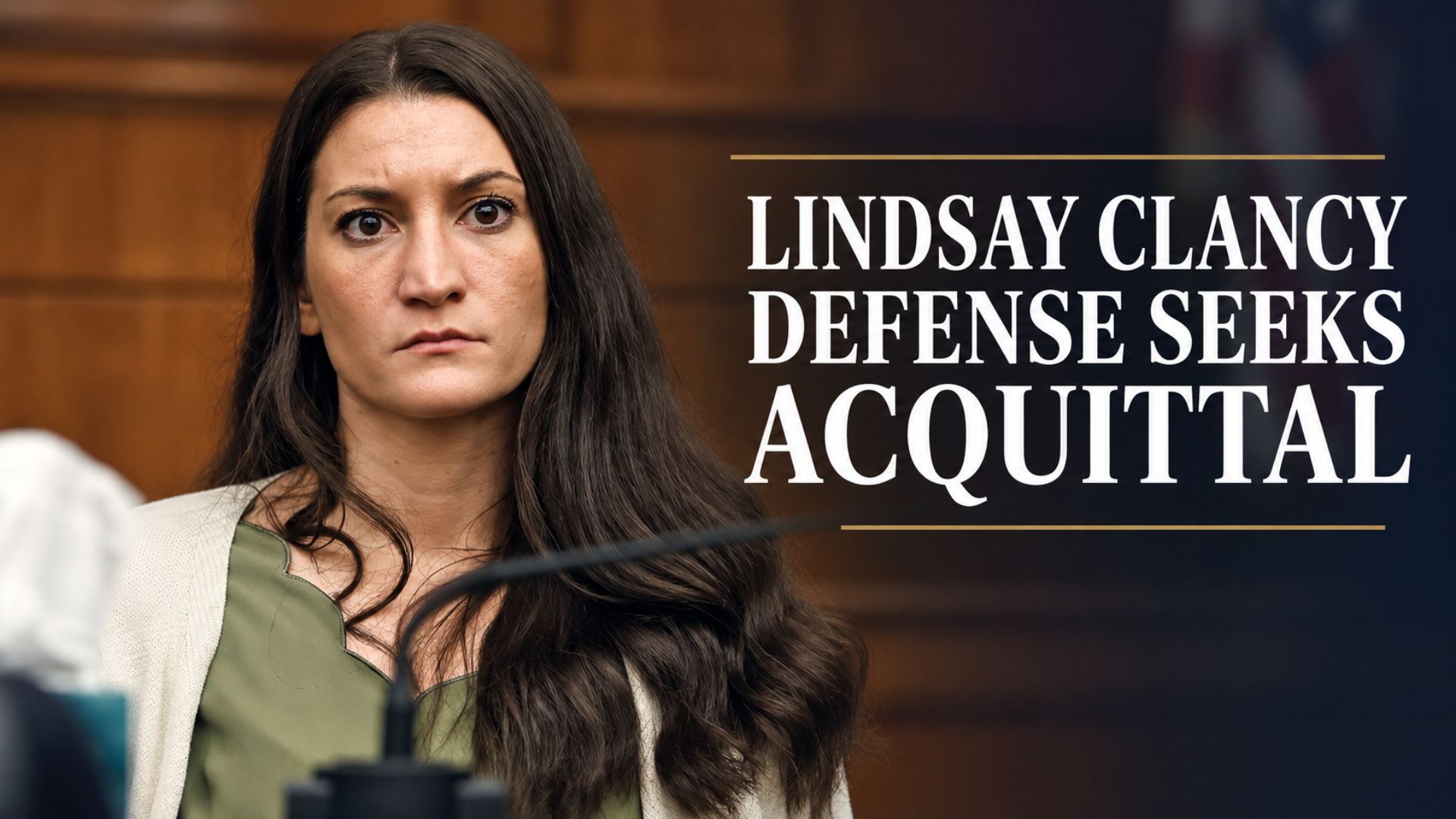
Image Source: Instagram
| Quick Report: Lindsay Clancy’s attorney has asked a Massachusetts judge to enter a finding of not guilty based on lack of criminal responsibility following the mistrial in her three-count murder case. Defense attorney Kevin Reddington argues that prosecutors did not present sufficient evidence to establish Clancy’s criminal responsibility beyond a reasonable doubt and is seeking a ruling that would prevent a second trial. The filing comes less than a week after jurors deadlocked 11-1 and Judge William Sullivan declared a mistrial. Prosecutors have not yet announced whether they intend to retry Clancy. The defense has asked the judge to consider the motion at a September 29 court conference. |
Lindsay Clancy’s defense is asking the Massachusetts judge who presided over her murder trial to acquit her rather than allow prosecutors an opportunity to try the case again.
Defense attorney Kevin Reddington filed a motion asking Plymouth Superior Court Judge William Sullivan to enter a finding of not guilty based on lack of criminal responsibility. The request follows the September 4 mistrial, which ended the first trial without a unanimous verdict.
If the judge grants the defense motion, it would prevent Clancy from facing a second trial on the three first-degree murder charges. The motion has not been granted, and the charges remain unresolved.
Reddington has asked Judge Sullivan to consider the request during a court conference scheduled for September 29.
Defense Argues Prosecutors Did Not Prove Criminal Responsibility
The defense motion focuses on the central issue that divided the jury during Clancy’s first trial: whether she was criminally responsible for her actions at the time of her children’s deaths.
Under the standard applied in the case, prosecutors were required to prove beyond a reasonable doubt either that Clancy did not suffer from a mental disease or defect or that, despite such a condition, she retained the substantial capacity to appreciate the wrongfulness of her conduct or conform her conduct to the requirements of the law.
Reddington argues that the prosecution failed to satisfy that burden.
The defense points to psychiatric testimony presented during the trial and maintains that the experts did not dispute that Clancy was suffering from a mental illness. The disagreement centered instead on the nature and effect of her condition and whether she remained legally responsible for her conduct.
Clancy’s attorneys argued at trial that she was experiencing postpartum psychosis and lacked criminal responsibility when her three children died in January 2023.
Prosecutors took the opposite position, arguing that Clancy understood what she was doing and remained capable of appreciating the wrongfulness of her conduct.
Filing Follows Lindsay Clancy Mistrial
The new defense motion comes days after Clancy’s first murder trial ended without a verdict.
As Brownstone Law previously reported when Lindsay Clancy’s murder trial ended in a mistrial, Judge Sullivan declared a mistrial on September 4 after jurors repeatedly informed the court that they could not reach a unanimous decision.
The jury had deliberated for seven days and approximately 36 hours.
Information disclosed during the final stages of the trial indicated that the jury was divided 11-1. The defense maintained that 11 jurors favored finding Clancy not guilty based on lack of criminal responsibility, while one juror remained opposed. No unanimous verdict was returned, however, and the court therefore did not enter a formal finding of guilt or innocence.
Before the mistrial was finalized, Clancy’s attorneys unsuccessfully sought emergency intervention from the Massachusetts Supreme Judicial Court concerning the alleged conduct of the holdout juror.
The mistrial left prosecutors legally able to consider another trial unless a subsequent court ruling prevents the case from proceeding.
Defense Asks Judge to Prevent a Second Trial
Reddington’s latest filing seeks a different route to resolving the case.
Rather than waiting for prosecutors to announce whether they will retry Clancy, the defense is asking Judge Sullivan to determine that the evidence presented at trial was legally insufficient to establish criminal responsibility beyond a reasonable doubt.
The motion effectively asks the court to resolve the case in Clancy’s favor despite the jury’s inability to reach a unanimous verdict.
The filing does not itself terminate the prosecution. Judge Sullivan must decide whether the defense has established a legal basis for the requested relief.
As of the filing, prosecutors had not publicly announced whether they intended to seek a second trial.
Prosecutors Argued Clancy Remained Criminally Responsible
During the first trial, prosecutors relied in part on Clancy’s conduct before the deaths of her children to argue that she retained awareness and control.
The prosecution pointed to evidence that Clancy continued performing routine activities in the days and weeks before the killings, including driving, planning a birthday celebration and taking one of her children to a medical appointment.
Prosecutors argued that those activities supported their position that Clancy remained capable of understanding her actions.
The defense disputes that conclusion.
Reddington argues that a person’s ability to perform ordinary tasks does not necessarily establish criminal responsibility during an acute psychiatric crisis. The defense maintains that the evidence concerning Clancy’s mental condition did not establish beyond a reasonable doubt that she possessed the legally required capacity at the time of the deaths.
The judge has not yet ruled on those arguments.
What Happens Next in the Lindsay Clancy Case?
The next major proceeding is expected to be the September 29 court conference, when the defense has asked Judge Sullivan to consider its motion.
Several issues therefore remain unresolved.
Judge Sullivan could grant or deny the defense request, and prosecutors must separately determine whether they intend to seek another trial if the charges remain pending.
Until the court rules on the motion, the September 4 mistrial remains the most recent disposition of the murder trial. It was neither a conviction nor an acquittal.
Clancy remains charged with three counts of first-degree murder involving the January 2023 deaths of her children, 5-year-old Cora, 3-year-old Dawson and 8-month-old Callan.
She remains at a psychiatric hospital while the case continues. Clancy is paralyzed from the waist down following injuries sustained after jumping from a second-story window on the night of the children’s deaths.
The September 29 proceeding could determine whether the defense motion is resolved at that stage or whether the case continues toward the possibility of another trial.
Disclaimer: This article is provided for general informational purposes and is based on publicly available reporting and court proceedings involving Lindsay Clancy. The defense motion contains arguments that have not yet been accepted by the court. The September 2026 mistrial did not determine Clancy’s guilt or innocence, and no unanimous verdict was returned. Clancy is presumed innocent unless and until proven guilty beyond a reasonable doubt. Statements concerning the parties’ allegations, legal arguments, jury communications, and evidence should not be treated as judicial findings unless expressly identified as such. This article does not constitute legal advice.