Last Updated: September 14, 2026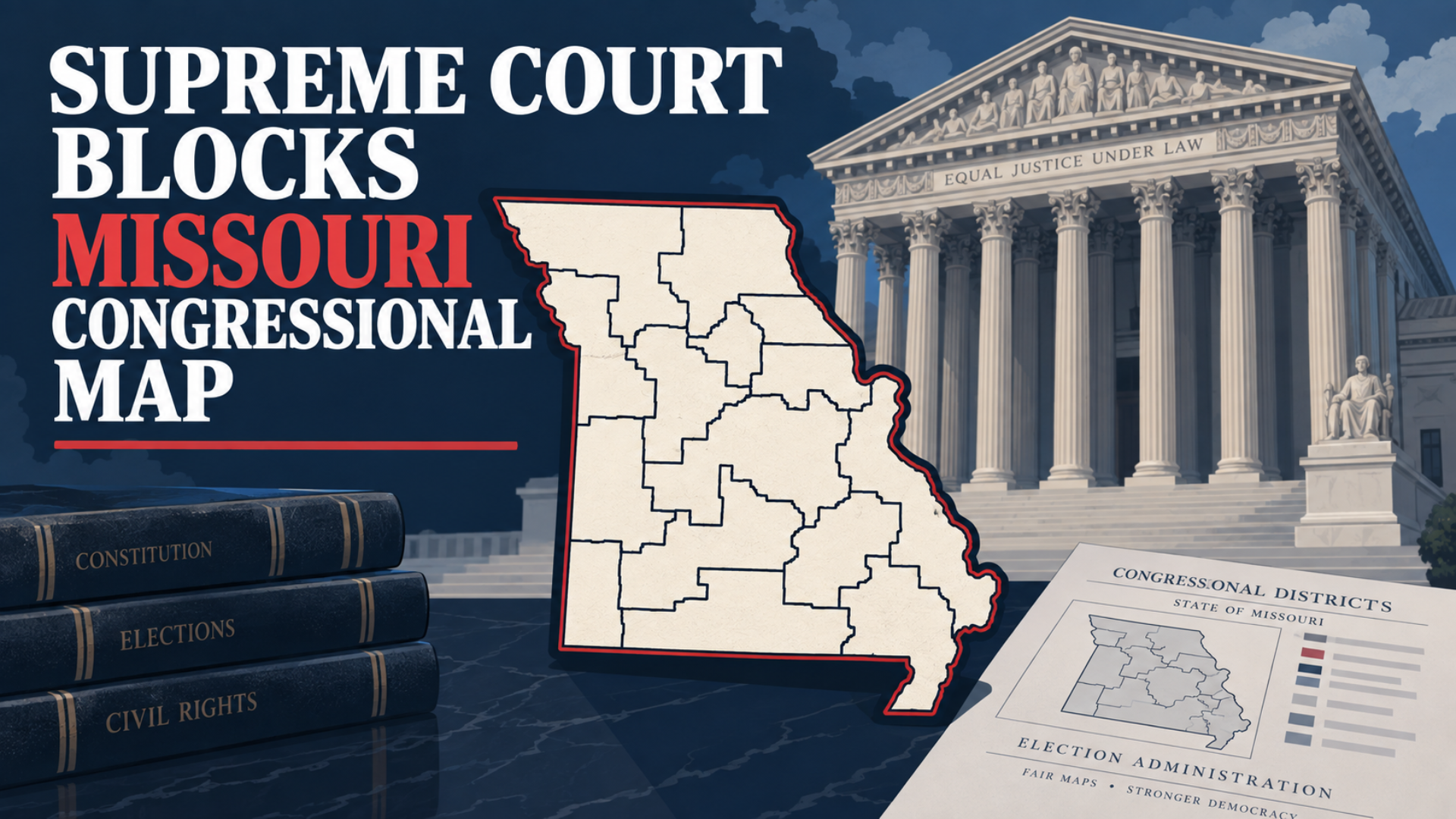
| Quick Report: Lindsay Clancy’s attorney has asked a Massachusetts judge to enter a finding of not guilty based on lack of criminal responsibility following the mistrial in her three-count murder case. Defense attorney Kevin Reddington argues that prosecutors did not present sufficient evidence to establish Clancy’s criminal responsibility beyond a reasonable doubt and is seeking a ruling that would prevent a second trial. The filing comes less than a week after jurors deadlocked 11-1 and Judge William Sullivan declared a mistrial. Prosecutors have not yet announced whether they intend to retry Clancy. The defense has asked the judge to consider the motion at a September 29 court conference. |
The U.S. Supreme Court has intervened in Missouri’s congressional redistricting dispute, temporarily blocking a federal court order that would have required the state to use its 2025 congressional map in the November 2026 midterm elections.
On September 10, the Supreme Court granted an emergency stay in People Not Politicians v. Onder, No. 26A326. The order stays a September 8 ruling from the U.S. District Court for the Eastern District of Missouri while the federal litigation continues in the U.S. Court of Appeals for the Eighth Circuit.
The Supreme Court’s order does not decide whether Missouri’s 2025 congressional map is lawful or constitutional. Instead, it determines which lower-court order will remain effective while the federal appeal proceeds.
For now, Missouri’s congressional districts adopted in 2022 remain in effect for the November 3 general election.
Supreme Court Stays Federal Court Order Requiring New Map
The latest dispute arose after a federal judge issued a September 8 order requiring Missouri election officials to use the congressional districts established under House Bill 1, the redistricting legislation enacted in 2025.
That federal ruling came after the Missouri Supreme Court had already held that HB 1 could not take effect unless Missouri voters approved it through the state’s referendum process.
The federal district court temporarily required the state to use the newer districts after finding potential federal constitutional problems with changing congressional maps between the August primary election and the November general election.
Opponents of the 2025 map then sought emergency relief from the U.S. Supreme Court.
On September 10, the justices granted their request and stayed the federal district court’s order.
The Supreme Court specified that the stay will remain in place while the Eighth Circuit considers the appeal and during any timely petition for a writ of certiorari seeking further Supreme Court review.
If the Supreme Court later denies certiorari, the stay will automatically terminate. If the Court grants review, the stay will remain until the Supreme Court sends down its judgment.
Ruling Follows Missouri’s Earlier Supreme Court Request
The September 10 order marked the second time within days that the Missouri redistricting dispute reached the U.S. Supreme Court.
As Brownstone Law previously reported in its coverage of Missouri’s request to restore the Republican-backed congressional map, Missouri Secretary of State Denny Hoskins had separately asked the Supreme Court to stay the Missouri Supreme Court ruling that prevented the 2025 map from taking effect without voter approval.
That case, Hoskins v. von Glahn, No. 26A304, followed the Missouri Supreme Court’s September 3 decision concerning the referendum petition challenging HB 1.
Justice Brett Kavanaugh denied Hoskins’ emergency application on September 8, leaving the state supreme court’s ruling in place.
Later that day, however, the federal district court issued its separate order requiring use of the 2025 districts, creating conflicting state and federal court directives over which map should govern the November election.
The Supreme Court’s September 10 stay suspended the federal court order.
Missouri Supreme Court Ruled 2022 Map Remains in Effect
Missouri lawmakers enacted House Bill 1 in 2025, replacing the congressional districts established following the 2020 census.
The new congressional plan substantially changed the Kansas City-area 5th Congressional District represented by Democratic U.S. Rep. Emanuel Cleaver and was expected to improve Republican prospects of gaining another congressional seat.
Opponents of HB 1 pursued a statewide referendum challenging the legislation.
Secretary of State Hoskins rejected the referendum petition, taking the position that Missouri’s constitutional referendum provisions did not apply to congressional redistricting.
The Missouri Supreme Court disagreed.
In its September 3 decision, the state’s highest court held that the referendum petition was legal, sufficient, and timely. The court ruled that HB 1 never took effect because it had been referred to voters and ordered the referendum placed on the November 2026 ballot.
The Missouri Supreme Court further held that the congressional districts enacted in 2022 remain in full force and effect for the November 2026 general election unless and until voters approve HB 1.
Two Supreme Court Proceedings Addressed Missouri Map
The redistricting dispute reached the U.S. Supreme Court through two separate emergency proceedings.
In Hoskins v. von Glahn, Missouri officials sought to stay the Missouri Supreme Court ruling and allow the 2025 congressional map to be used. Justice Kavanaugh denied that request on September 8.
The second proceeding, People Not Politicians v. Onder, arose from the separate federal lawsuit.
After the federal district court ordered Missouri to use the HB 1 districts, opponents of the map filed an emergency application asking the Supreme Court to suspend that ruling.
Justice Kavanaugh referred the application to the full Court, which granted the stay on September 10.
The September 10 order did not resolve the underlying constitutional or statutory disputes over Missouri’s congressional redistricting plan. It temporarily prevents the federal district court’s September 8 order from taking effect while the appeal continues.
Missouri Set to Use 2022 Congressional Districts
With the federal district court order stayed, the Missouri Supreme Court’s ruling concerning HB 1 remains operative.
Under that decision, Missouri’s 2022 congressional districts remain in force for the November 3, 2026, general election unless subsequent court action changes the situation.
The issue is particularly significant because Missouri conducted its August congressional primary using the newer districts.
State officials argued that changing district boundaries between the primary and general elections could create constitutional and administrative problems.
The U.S. Supreme Court nevertheless granted the challengers’ request to stay the federal order requiring use of the 2025 map while the litigation continues.
What Happens Next in the Missouri Redistricting Case?
The federal case will continue in the U.S. Court of Appeals for the Eighth Circuit.
The Supreme Court’s September 10 order provides that its stay will continue through the Eighth Circuit proceedings and, if a timely petition is filed, through the Supreme Court’s consideration of a petition for a writ of certiorari.
Meanwhile, Missouri voters are scheduled to consider the referendum concerning HB 1 in the November 2026 general election.
For the upcoming congressional elections, the Supreme Court’s September 10 stay means the federal order requiring use of the Republican-backed 2025 districts is currently blocked, and Missouri’s 2022 congressional map remains in effect.
The Supreme Court’s action is an emergency procedural ruling and does not constitute a final decision on the legality or constitutionality of Missouri’s congressional redistricting plan.
Disclaimer: This article is provided for general informational purposes and reports on ongoing election-related litigation. The Supreme Court’s September 10 order temporarily stays a lower-court ruling and does not constitute a final decision on the legality or constitutionality of Missouri’s congressional map. The parties’ constitutional and statutory arguments remain subject to further judicial review. This article does not constitute legal advice.