Last Updated: September 10, 2026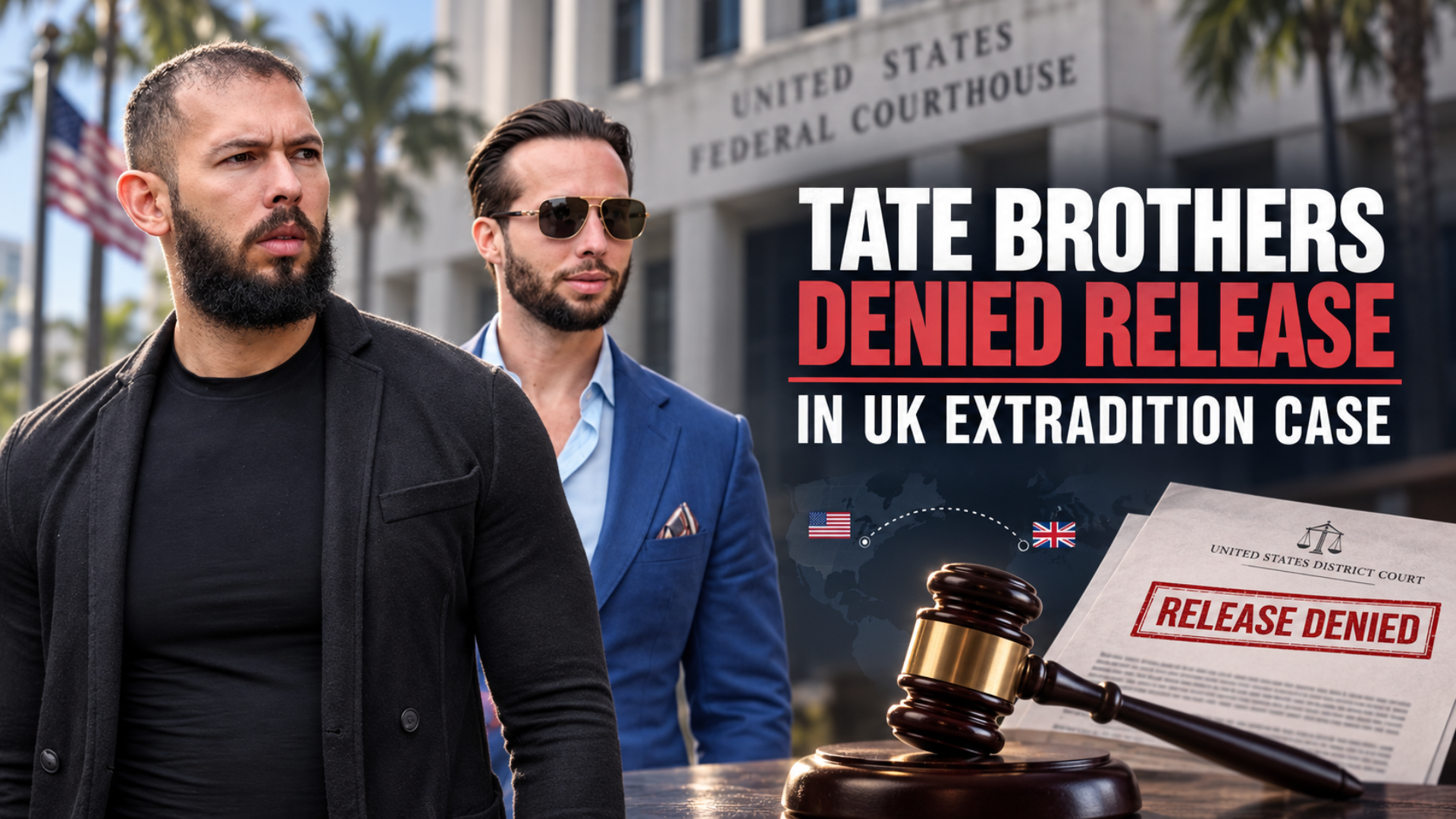
Image Source: Instagram
| Quick Report: A federal magistrate judge has denied Andrew and Tristan Tate’s request to be released from a Miami detention facility while they contest extradition to the United Kingdom. U.S. Magistrate Judge Lauren Louis concluded that the brothers failed to establish that they were not flight risks or dangers to the community and had not demonstrated special circumstances warranting their release. The September 9 ruling follows an August hearing during which their attorneys proposed financial bonds, passport surrender, and electronic monitoring. The decision concerns only their detention during the extradition proceedings and does not determine whether they will be extradited or whether they committed the offenses alleged against them. |
Andrew and Tristan Tate will remain in federal custody after a judge rejected their request for release while the United Kingdom seeks their extradition on criminal charges.
U.S. Magistrate Judge Lauren Louis issued the ruling in Miami on September 9. She found that the brothers had not satisfied the requirements necessary to obtain release during an extradition proceeding.
The judge identified their reported wealth, frequent international travel, and ability to move between countries as factors supporting the determination that they posed substantial flight risks. Although their attorneys offered release conditions intended to ensure their appearance in court, the judge concluded that the proposed measures did not adequately address those concerns.
The ruling does not decide the United Kingdom’s extradition request. It determines only whether the brothers may leave federal custody while the extradition case moves forward.
Judge Rejects the Tate Brothers’ Proposed Release Conditions
Andrew and Tristan Tate asked the federal court to release them under conditions that reportedly included financial bonds, surrendering their passports and submitting to electronic location monitoring.
Their attorneys argued that the brothers’ public profiles would make it difficult for them to flee without being detected. The defense also characterized some of their public claims about wealth and international influence as exaggerated features of their online personas rather than reliable descriptions of their actual resources.
Judge Louis was not persuaded that their visibility or the proposed restrictions sufficiently reduced the risk of flight. In her order, she described the brothers as presenting a “quintessential flight risk” and found that the record demonstrated an exceptional capacity to leave the court’s jurisdiction.
The court also concluded that the brothers failed to show that they posed no danger to the community or that special circumstances justified their release.
Release in an international extradition proceeding is evaluated under more restrictive principles than bail in an ordinary federal criminal prosecution. A person seeking release generally must address the risks of flight and danger while also demonstrating special circumstances that justify release during the extradition process.
The court determined that the Tate brothers did not meet those requirements.
Ruling Resolves the Release Request Considered in August
The September 9 order resolves the release request that Judge Louis considered during an August 27 hearing.
At the conclusion of that hearing, the judge did not immediately decide whether the brothers would be permitted to leave custody. She instead indicated that she would review additional information before issuing a ruling.
Brownstone Law previously reported that the Tate brothers remained in federal custody while the judge considered their release request.
During the August hearing, both brothers testified in support of their request. Their attorneys argued that they had complied with restrictions imposed in other proceedings and could be monitored effectively if released.
Federal prosecutors opposed release, arguing that the brothers’ international connections, resources and prior public statements supported continued detention.
Judge Louis has now ruled that detention must continue while the extradition proceedings remain pending.
United Kingdom Seeks the Brothers’ Extradition
Andrew and Tristan Tate were arrested in Miami on July 18 after British authorities requested their extradition from the United States.
The United Kingdom is seeking their surrender in connection with criminal charges involving allegations of rape, assault and facilitating trafficking for sexual exploitation. The alleged conduct dates from 2010 through 2017 and involves multiple alleged victims.
Both brothers hold citizenship in the United States and the United Kingdom. They have denied all allegations of wrongdoing.
For a broader explanation of the allegations and proceedings involving the brothers in different jurisdictions, read Brownstone Law’s guide addressing why Andrew and Tristan Tate were arrested.
The brothers are also involved in separate criminal proceedings in Romania. Their attorneys argued that continued detention in the United States would interfere with their ability to participate in and prepare for those proceedings.
Judge Louis did not find that the difficulties associated with the Romanian proceedings constituted sufficient special circumstances to justify release. The court noted the availability of methods for communicating with legal counsel while in custody.
Detention Decision Is Not an Extradition Ruling
The denial of release does not mean the court has approved the Tate brothers’ extradition to the United Kingdom.
A federal extradition proceeding addresses whether the evidence and legal materials submitted by the requesting country satisfy the applicable treaty and statutory requirements. It is distinct from a criminal trial and does not determine guilt or innocence on the underlying charges.
The court may ultimately conduct an extradition hearing to determine whether the legal requirements for certification have been satisfied. If a judge certifies a person as extraditable, the final decision concerning surrender ordinarily rests with the executive branch of the United States government.
The September 9 order addresses only the narrower question of whether Andrew and Tristan Tate should remain detained while that process continues.
Defense Disputes the Court’s Assessment
The Tate brothers’ legal team disagreed with the detention ruling and maintained that the brothers would continue defending themselves through the appropriate legal proceedings.
Their attorneys argued that the brothers had complied with restrictions imposed during earlier proceedings in Romania and had not attempted to flee when previously permitted to travel.
They also disputed the government’s characterization of their online statements and public personas.
The court nevertheless determined that the totality of the information before it supported continued detention. In particular, it relied on the brothers’ international mobility, reported resources and capacity to leave the jurisdiction.
The defense may seek further review of the detention decision. Any such challenge would remain separate from the ultimate determination of whether the extradition request should be certified.
Tate Brothers Will Remain in Miami Custody
Andrew and Tristan Tate will remain in a federal detention facility in Miami unless the detention order is modified or reversed during subsequent proceedings.
The broader extradition process could continue for several months and may involve additional hearings and legal challenges. British authorities are expected to provide the documentation required to support their extradition request as the proceeding advances.
Until the federal court issues further orders, the brothers will remain detained while contesting their proposed surrender to the United Kingdom.
Disclaimer: This article is provided for general informational purposes and reports on publicly available proceedings involving Andrew and Tristan Tate. The September 9 ruling concerns their detention during an extradition case and does not determine whether they will be extradited or whether they are guilty of the criminal offenses alleged against them. The brothers deny all allegations of wrongdoing. This article does not constitute legal advice.