Table of Contents
- Sustained vs. Overruled
- The “Big Three” Most Common Courtroom Objections
- Dealing with Objections on the Stand
- Conclusion
- Frequently Asked Questions
| Summary
|
Giving testimony in a courtroom can be a stressful experience for a witness. The lawyer may ask a complex question or cut in abruptly. However, an American courtroom operates under strict rules, known as the Rules of Evidence, to ensure accurate information and prevent misleading statements from entering the record.
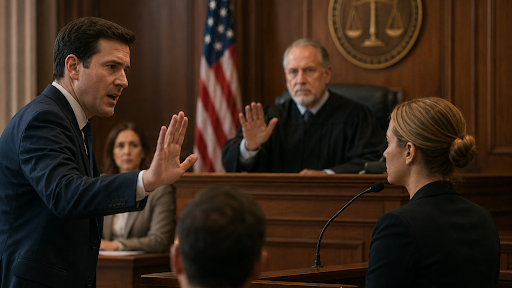
Ever wonder why lawyers say objections during a trial?
They do so to ensure that a judge or jury only decides a case based on fair, reliable, and trustworthy information. They raise an objection when the opposing attorney crosses a legal line while questioning a witness or introducing new evidence. An attorney can raise different types of objections to protect the witness from unfair, misleading, or deceptive questioning and allow them to tell their story based strictly on facts they know firsthand.
A witness must stop speaking the moment they hear the word “objection” and wait for the judge’s ruling.
Sustained vs. Overruled
The judge immediately issues one of the following two rulings when an attorney raises an objection:
- Sustained
- Overruled
Sustained
The judge says “sustained” after an objection when they agree with the attorney who raised it. This means that the judge determines that the opposing lawyer’s question or the evidence they tried to introduce violates court rules.
A sustained objection blocks the question. The witness is not allowed to answer it, and the jury is not allowed to consider it.
Overruled
When the judge decides that the question or piece of evidence does not violate the Rules of Evidence and is perfectly acceptable, they overrule the objection. The witness must answer the question asked by the opposition’s attorney, and the judge or jury considers that information when deciding the outcome of the case.
The “Big Three” Most Common Courtroom Objections
Courtrooms operate under many different rules of evidence. However, the following three rules make up the most common court objections you will hear during a trial.
Objection 1: Hearsay
Hearsay means that a witness cannot repeat a statement made by someone outside the court to prove a fact. A witness can only testify about what they personally saw, heard, or did.
| For example, a witness in a personal injury lawsuit testifies that the defendant was speeding. |
The neighbor is not present in court, and the opposing attorney has no opportunity to cross-examine them. The opposing attorney can raise a hearsay objection.
Objection 2: Speculation
| For example, an employee is testifying about a wrongful termination in an employment discrimination case. |
The witness cannot say anything about the motives or hidden intentions of some other person. Allowing a witness to guess creates a high risk as the judge or jury may base their final verdict on imagination rather than proven facts.
Objection 3: Relevance
An attorney raises a relevance objection when the question or evidence has absolutely nothing to do with the case being decided. Any evidence, argument, or testimony presented in the courtroom must make a fact of the case more or less likely to be true.
| For example, two business partners are suing each other for breach of contract over a failed real estate transaction. |
This question has no logical connection to the breach of contract. In fact, it is an attempt to damage the character of the witness, introduce emotional bias, and confuse the jury.
Dealing with Objections on the Stand
Taking the witness stand can be stressful, especially when lawyers start throwing out objections. It is important for the witness to know exactly how to react once an objection is made.
The witness should stop immediately once a lawyer says ‘objection’ and wait for the judge’s ruling.
- If the judge says ‘sustained’, it means that the objection is valid and the question is blocked. The witness should say absolutely nothing.
- If the judge says ‘overruled’, it means the judge disagrees with the objection and allows the question. The witness should answer the question.
Conclusion
Courtroom objections are necessary boundaries that keep the legal process fair. By sticking to the rules, the court ensures that the outcome of the case is based solely on reliable, firsthand facts rather than rumors, guesses, or distractions. The witness must stop speaking when an objection is raised and wait patiently for the judge’s ruling.
| Brownstone Appellate Law Firm is a national leader in appeals law. We handle civil and criminal appeals in both state and federal courts across the U.S. Get a free consultation today! |
Frequently Asked Questions
What does it mean when a judge says “sustained”?
It means that the objection is valid and the witness should not answer the question unless instructed otherwise.
What does “objection overruled” mean?
It means the judge disagrees with the attorney’s objection, and the witness must answer the question.
Why do lawyers say “objection” during a trial?
A lawyer raises an objection when the opposing lawyer asks an improper question or presents inadmissible evidence.
What does speculation mean in court?
Speculation means testimony is based on guesses or assumptions instead of firsthand knowledge.
What are the most common objections made during trial testimony?
The most common objections made during trial testimony include hearsay, speculation, and relevance.